OODUAPATHFINDER--lifting up a standard

Oro To nlo/Talking Point-OODUAPATHFINDER--lifting up a standard
Bulletin 75
February 19,2026
Follow-up to "Letter to the Church in Nigeria: From Balanced Ticket to Balanced Federation" Published in May 2025. 
The manipulation of electoral timetables to accommodate religious observances is not a trivial administrative adjustment. It is a Constitutional warning: a secular republic is being bent to the compass of faith.
If we allow the scheduling of the 2027 elections to be changed because one religion’s calendar might coincide with polling, we will have surrendered an essential principle, to wit: that religion must not dictate state policy.
The National Assembly’s recent decision to amend the Electoral Act timetable, explained publicly by Senate Leader Opeyemi Bamidele on the grounds that holding elections during Ramadan “could adversely affect voter turnout, logistical coordination, stakeholder engagement and the overall inclusiveness and credibility of the electoral process” and “concerns raised by some Muslim stakeholders who demanded that the elections be shifted to avoid coinciding with Ramadan” makes the point for us: the stage is now set for subordinating the secular calendar of the state to religious obligation.
If this is allowed to stand, the door opens to a future where any religious group with political leverage can ask for state timetables, laws, and resources to be remade in its image.
That would be the antithesis of secularism. The 1999 Constitution, for all its many faults, explicitly proclaims Nigeria a secular state. That phrasing is not decorative; it is the single most important safeguard that prevents one set of religious requirements from becoming public law.
Hence, we submit as follows:
(i) The justification implies Nigeria is an Islamic country. It is not. It is a Secular country as the 1999 Constitution says, despite its many faults. To shift an already decided electoral calendar because of one religion is a direct affront to the proclaimed Secularity, which naturally implies that any religious obligation must not interfere with State Policy.
The favorite mantra of the politicians during any religious obligation is to harp on “religious harmony”. Yet religious harmony can only occur in a Secular Society. Once a religious obligation becomes an influencer of State Policy, harmony disappears. The consequence is not harmony but a struggle for hegemony. The first casualty is the very harmony the politicians claim to cherish. Religious peace does not arise from bending the state to the current demands of any faith. On the contrary, religious harmony is possible only when the state remains neutral: when public institutions treat all faiths, and non-faith, equally.
This is why a new, Secular, Federal, Ethno-National Constitution becomes imperative. It favors Christians Traditionalists, Muslims and others, including atheists.
Nationalities will be able to address their religious diversities. No one religion can or will be able to hold the entire society to ransom.
Hence, what we need to do is to compel the National Assembly to review the entire electoral construct, and by extension, the entire 1999 Constitution with its hand-over dates and schedule elections to any period outside any religious obligation. And such a schedule would be permanent. Everyone will be aware of this social obligation, ab initio. The National Assembly has simply set the stage for future adjustments based on religious preferences, especially when it is known that these religious obligations have no fixed or permanent dates.
(ii) We are all aware of the serial "alterations" to the 1999 Constitution with no improvement on its ability to address Nigeria's existential issues, hence the same rigmarole every four years. The 1999 Constitution has been amended many times; the process has produced no structural solution to Nigeria’s existential crisis. Amendments and tinkering have not made the federation fairer, safer, or more prosperous. The cycle repeats: four years of contest, two months of campaigning, appeals to identity, and then the renewal of grievances.
(iii) This is the major reason for this call to boycott the 2027 elections and utilize the intervening period to prepare a new Constitution under which any new elections would be held. This new Constitution is to address the fundamental and deliberate failure of the 1999 Constitution to recognize the Peoples of Nigeria as Federating Units. This major flaw is the reason the Constitution and any State Policy arising therefrom are suddenly and always beholden to "stakeholders" who are not even recognized by the Constitution itself. Unless we are now being told that the states, recognized as “Federating Units” are the stakeholders demanding the recalibration of elections to suit their religious obligations? But we also know that there is no state with an official religion. Hence the stakeholders refer to the Peoples, in this instance, the Muslims.
(iv) This being the case, how about Christian stakeholders? At this point, we need to remind ourselves that this affront against Secularism began with the introduction and implementation of Sharia Laws by 12 Northern States. The then President, Olusegun Obasanjo ignored the warnings about its implications, relegating it to “politics”-- whichever way he defined it hence it was easy to classify his lackadaisical attitude as inconsequential. However, events since then have shown that his attitude was more of pandering to Islamist interests, going by the steady and continuous rise of Islamic terrorism since then, up till the current situation in the country where the Central Government is helpless in confronting terrorism, renamed “banditry” by the Muhammadu Buhari Administration and continuing till date. Yet, as helpless as the Central Government is, state governors in the “12 Sharia States” have no compunction negotiating with these Islamist terrorists.
(v) The eventual response of the Christian community to the creeping de-secularization of Nigeria was to object to the “Muslim-Muslim Ticket” during the 2023 elections, apparently forgetting that every administration before 2023 had been religiously “balanced”, to wit; “Christian-Muslim” or “Muslim-Christian” with no corresponding reduction in continued pandering to steady Islamization. Indeed, Islamization steadily increased with each administration. Which means the problem was and is not about a “Balanced Ticket” but about a “Balanced Federation”.
(vi) As stated in our “Letter to the Church” in May 2025:
“The Church must now move from advocating for religious balance in politics to demanding a Balanced Federation based on the recognition of Nigeria’s Indigenous Nationalities. It must now shift its focus from religious parity on election issues to Constitutional justice for Nigeria's Nationalities. It is not enough to seek symbolic inclusion in a broken system. The Church must push for Constitutional Restructuring through Nationality Referendums, the only viable path to justice, peace, and development. The Christian community must rally not around candidates, but around a cause: the Re-Federalization of Nigeria through Nationality Referendums.”
(vii) The 2027 elections and the pandering by the National Assembly mandates a new Constitutional Order. The “Church” is not short of Restructuring advocates. Pastors Tunde Bakare and Paul Adefarasin are good examples.
Both have raised fundamental questions about nationhood and dignity. These questions, to wit: “Who is a Nigerian? Under what terms should diverse groups coexist?” raised by Pastor Bakare and Pastor Adefarasin declaring that “Nigeria was not created by God but by British colonialists” are not rhetorical. They demand answers that only a new Constitution can supply. The proper response is not to defer to the political convenience of the moment, but to mobilize a clear Constitutional pathway that allows Nigerians to answer these questions for themselves.
(viii) We believe this is the time to provide the answer.
Pastor Adefarasin's declaration is well known in Nigeria so there is no need to dwell on it.
To the question: “Who is a Nigerian”? We answer: Nigeria is a country of multiple Peoples and cultures brought together by the British.
Hence a “Nigerian” is one or a combination of that multiplicity.
Which the 1999 Constitution denied and neutralized by not recognizing them as Federating Units. For, if Nigeria is a Federation, and it is or supposed to be, we must know who the Federators are.
(ix) This is why 2027 is crucial. This is why the “Nigeria Question” must be answered by Nigerians. This is why the Nigerians must determine “under what terms should the diverse groups within our borders coexist.”
These terms are to be decided by the Federating Units/groups through the instrumentality of Nationality or Ethno-National Referendums– the only valid, legal and Legitimate way to arrive at coexistence.
(x) Since the National Assembly has deemed it fit to accommodate Muslim stakeholders, nothing stops it from accommodating Christian stakeholders demanding a new Secular Federal Constitution through Ethno-National/Nationality Referendums.
This will be the alternative to Christians’ apprehensions about a “Balanced Ticket”.
If the government and the National Assembly are prepared to adjust the electoral architecture to address religious concerns, then they must be prepared equally to answer the corresponding Constitutional demand: recognize the peoples of this land as Federating units and enshrine secular Federalism in a new Constitution. If they refuse that answer, citizens have a right and an obligation to withhold consent from a process that undermines secular order through boycotting the 2027 elections.
(xi)This call for a boycott is not in isolation and not for its own sake. It is the anchor for the demand for a new Constitutional Order. It is a call to all who desire a Truly Secular Republic just as we desire a Truly Federal Republic– Christians, Muslims, Traditionalists, Atheists and all in-between.
Pastors Bakare and Adefarasin are enjoined to give this suggestion a thorough review and join others in pressurizing our politicians to accede to the demands for Nationality/Ethno-National Referendums.
This will ensure we stop competing over tokens and start collaborating on structural reform. Symbolic wins do not create durable justice. What will secure peace and development is a Constitutional framework that recognizes the plural foundations of the country and distributes power accordingly.
(xii) We stand at a crossroads. The terms we accept now will shape the country for generations. If Nigeria is to remain a Secular republic that respects its multiplicity, then the time for a new Constitutional order is not some distant rhetorical promise: it is now. Those who value secularism, Federal justice, and the integrity of the state must act together to demand nothing less.
Editorial Board
Yoruba Referendum Committee.
Bulletin 74
December 7,2025
(i) A river that forgets its source will soon dry up. This popular Yoruba proverb speaks to identity, memory, and continuity. While the saying is often taken literally, referencing Ile-Ife as the physical and spiritual “Source”, the Yoruba Referendum Committee invokes it metaphorically to warn that forgetting our political source can prove just as fatal. For the Yoruba people, that source is Federalism: the system that once allowed us to exist as a distinct cultural nation within Nigeria. If we neglect the principles and structures of Federalism, all other aspects of our society will eventually erode, and our development will stagnate.
(ii) Let us start by revisiting the historical foundation of the Yoruba political economy. The Western Region, established under the leadership of Chief Obafemi Awolowo and the Action Group pursued Federalism single-mindedly. Their push for regional autonomy produced an unparalleled developmental trajectory for the West: free education, industrial investment through the Western Nigeria Development Corporation (WNDC), and robust social welfare schemes.
(iii) The Motion for the creation of more states moved by the Action Group on April 4, 1961, in Nigeria’s House of Representatives remains the most far-sighted attempt to address nationality tensions. It proposed a Federal structure that balanced regional autonomy with national unity. Subsequent state creation by military fiat ignored these Federalist principles and served unitarist ambitions instead.
(iv) The erosion of Federalism began with the 1966 military coup. The abolition of the Regions and the establishment of a unitary system were followed by a series of state creations that fractured the old regions without addressing the core nationality questions. These decisions plunged Nigeria into a civil war and continue to fuel insecurity today.
(v) Despite the formal return to civilian rule in 1999, the military’s centralist project lives on in the Constitution and administrative structures. The 1999 Constitution, which the people did not see or ratify, states in Chapter 1, Article 2:2 that “Nigeria is a Federation consisting of states and a Federal Capital Territory”. By describing the state as the primary unit of the Federation, the Constitution erases the nations and nationalities that existed before the states and reduces them to mere administrative districts. The people have no territorial recognition having been balkanized into different states thereby losing their social and cultural aspirations; the states created for them have no historical legitimacy; and the real source of sovereignty: the Yoruba people, the Tiv people, the Berom people, etc. is ignored.
(vi) The continuing security crisis in Nigeria, often labeled “banditry” or “terrorism”, is a direct outcome of this erasure. In the North and Middle Belt, Indigenous communities face armed groups that seize land and displace populations with impunity. These atrocities have intensified since 1999, regardless of which party holds the presidency. The culprits are often called “bandits,” “Fulani herdsmen,” or “Islamists,” but these labels obscure the political dynamic: a powerful core is using violence to control peripheral territories.
(vii) In many Northern states, the displaced Indigenous populations are shunted into IDP camps, while the state governments continue as if nothing has happened. The Constitutional recognition of the state as the federating unit allows these governments-often controlled by the same elites perpetrating violence-to remain in charge. The people, unrecognized as nations, lose both land and representation.
(viii) The neutralization of Yoruba development also has roots in a policy of “Nigerianization” that began under the Obasanjo military regime. The Federal Government took over institutions built by the Western Region, such as the University of Ife (now Obafemi Awolowo University) and the Western Nigeria Television (WNTV/WNBS). It removed history from the curriculum, undermining our collective memory and cultural consciousness. The economic assets of the Western Region were nationalized. Only timely intervention by individuals like Mr. C. S. O. Akande preserved some Western assets under the umbrella of Oodua Holdings.
(ix)Today, many Yoruba leaders, including state governors, appear more invested in Abuja-driven initiatives such as the “Development Commissions” with the Governors using the “DAWN Commission” as their preferred vehicle rather than revitalize and re-engineer Oodua Investments as the primary developmental vehicle to rebuilding regional autonomy. These initiatives align with the President’s preference for a “Nigerian variant of Federalism,” which is essentially Unitarist: centralizing development funds and authority while limiting genuine regional control. When push comes to shove, a hostile Federal Government can render these commissions useless.
(x) One reason for this drift is a lack of understanding of political economy. Policymakers often chase economic reforms without considering the political architecture underlying them. They rely on “political pragmatism” and “expediency” rather than principle, failing to recognize that Nigeria’s Constitutional arrangement transfers sovereignty from the people to the state. Every month, governors travel to Abuja to secure revenue allocations. Political office holders, particularly in the Yoruba region, thus become dependent on the same central authorities they should be challenging. This dependency leads to compromises with Fulani hegemonic interests, allowing anti-Federalist forces to dominate national and regional politics.
(xi) The Yoruba Referendum Committee supported Bola Ahmed Tinubu’s candidacy in 2023 and will support his bid for a second term. Our support is rooted in identity and principle. Tinubu is Yoruba, and his political “source” was Federalism. As a NADECO activist, he fought military dictatorship. As Lagos State Governor, he used judicial autonomy and creative revenue generation to claim greater control over state resources. He, along with late Lam Adesina, were early supporters of the Yoruba Constitution Group, which produced the Draft Yoruba Constitution as part of a broader push for regional autonomy.
(xii) However, supporting a leader does not mean following him uncritically. The President’s current strategy, i.e., postponing political reform until after completing economic reforms, fundamentally contradicts his Federalist origins. By centralizing decision-making and economic power, his policies have strengthened the anti-Federalist North. Examples include his push for “local government autonomy,” which repudiates Federalist principles; the creation of centrally managed zonal development commissions; and his Tax reforms and revenue sharing which favors the “North”; the cancellation of Mother tongue as the language of instruction in primary schools etc. Even his Ministry of Livestock Development, ostensibly created to address herder-farmer clashes, risks institutionalizing open grazing and land seizures.
(xiii) Ironically, as the North benefits from these policies, it continues to use insecurity and terrorism to influence national politics. Many Northern leaders, both in and out of office, openly threaten to undermine Tinubu’s presidency with outlandish statements. This dynamic shows that Unitarism will not appease those who oppose Federalism. The North’s strategy is to centralize power under any president, extract concessions, and then return to its own hegemonic agenda.
(xiv) It is naïve to believe that Federalism can be achieved through policies emanating from the center. True Federalism is political architecture, not a set of programs. Central reforms, no matter how well-intentioned, will always protect the interests of the central authority and as the saying goes: the road to hell is paved with good intentions. When economic reforms “succeed”-- by whatever parameters that may be used– under a Unitary Constitution, they make demands for a new Constitution appear redundant which means that this crisis is not about economic management; it is about power and sovereignty.
(xv) The National Assembly will soon embark on its periodic constitutional “alteration.” As an organization dedicated to Federalism, we must ask: can a legislature elected on party lines, not nationality or regional lines truly create a Federalist Constitution? Members of the National and State Assemblies are elected primarily to advance party interests, which often change at will. Parties do not represent nationalities, regions, or zones; they represent whichever alliances secure power. A genuine Federalist Constitution cannot emerge from such a process.
(xvi) Nevertheless, we must engage with our lawmakers. Our goal is to compel our State Houses of Assembly-and, by extension, the National Assembly- to recognize the Yoruba nation as a federating unit through a Yoruba Referendum. We must learn from the past: had the Action Group lost the 1951 Western Nigeria Parliamentary Elections, there would be no Western Region to celebrate. Our ability to win recognition within the law is the essence of returning to our “source.”
(xvii) Some may ask: “Will a Yoruba Referendum make any difference as a stand-alone?” Our answer is Yes. A Yoruba Referendum will not only reaffirm our identity and autonomy; it will motivate other nationalities to do the same. In parts of the Middle Belt and North, communities are being massacred, and their lands are being occupied. Many homogenous Indigenous nationalities are “distributed” into several states thereby depriving them of their inherent cultural and social aspirations. A democratic demand for self-governance and territorial recognition by these communities, displaced or otherwise, would transform the fight against insecurity. Instead of waiting for federal protection that never comes, they would establish their right to defend their land under a legally recognized political structure.
(xviii) The Yoruba Referendum Committee therefore calls on all Yoruba at home and abroad to mobilize. We must press our State Assemblies to pass the Bill for a Referendum into Law, compel the Governors to assent, and begin preparations to hold the Referendum. This is not a request; it is a right. They owe us that much.
(xix) We do not forget that a Federal Nigeria was once real and vibrant. We remember that our social democracy, our educational-economic model and institutions, and our cultural renaissance were built on Federalist foundations. We also remember how these structures were systematically dismantled by an anti-Federalist military regime and then entrenched into a civilian Constitution written without our consent.
(xx) If a river forgets its source, it dies. If the Yoruba forget Federalism, our political source, we will lose our capacity to navigate the waters of Nigerian politics. To the Yoruba nation, we say: the time has come to return to our source. To President Tinubu, we say: remember your own Federalist roots. Federalism is not a negotiation tactic; it is the foundation of our existence within Nigeria. Without it, we risk losing everything that makes us who we are.
Editorial Board
Yoruba Referendum Committee
Bulletin 73
October 19,2025
The Coup: Nationalities as the Antidote
By the Yoruba Referendum Committee
"Every coup in Nigeria has promised to end corruption and tribalism. None ever did."
The Yoruba Referendum Committee has long maintained that one of the central purposes of the Yoruba Referendum is its value as the antidote to military coups.
Now, with fresh whispers of another coup in the air, the call for complete Re-Federalization of Nigeria is no longer a matter of debate — it is a national necessity.
A coup may seem attractive to the growing number of anti-APC forces who have, since the earliest days of the Tinubu administration, openly courted the idea.
But those who forget history invite its worst repetitions.
The Lessons of Our Coups
Every military coup since January 15, 1966 claimed to fight "tribalism" and "corruption." Read their speeches — the sameness of their excuses leaps out. Yet none solved either problem.
The First Republic's developmental federalism was dismantled and replaced by nationalization and indigenization. These experiments birthed a centralized, inefficient economy, culminating in the Buhari civilian era — which the Tinubu administration now seeks to "correct," though by wrong and unsustainable means.
To expect salvation from another coup is not only naïve — it is insanity.
The Yoruba Position
Yorubaland, historically the bastion of Federalism, may once again hold the key. Ironically, it now risks becoming the battleground, simply because the incumbent president is Yoruba — and because he has dared to challenge Nigeria's laissez-faire capitalist orthodoxy.
Yet Nigeria's deepest fault line remains unresolved: the century-old struggle between Unitarism and Federalism.
President Tinubu's "financialism" — the notion that throwing money at every level of government will fix Nigeria — merely fattens the allocation system while deepening Unitarism. The illusion of fiscal abundance cannot mask the rot of centralized power.
The Real National Question
To prevent another coup, Nigeria must finally confront its National Question:
How can a multinational society live without endless violence, domination, or decay?
Our instability springs from the impossible ambition to forge one nation out of many nations.
This concentration of power at the center fuels ethnic tensions, insurgencies, and the rise of groups like Boko Haram.
So long as power remains trapped in Abuja, true development will remain impossible.
The outcome is predictable — ethnic conflict, one-party dominance, and a political elite increasingly reliant on the military they no longer control.
"The disease cannot cure itself. The antidote is Federalism."
The Federal Solution
A decisive resolution of the National Question in favor of Federalism is Nigeria's only way forward. It will stabilize the country, inspire Africa, and restore the dignity of black civilization worldwide.
We cannot copy State Capitalism like China or Russia — our diversity forbids such uniformity.
We cannot mimic unbridled capitalism as in the United States — we lack the military or institutional power to defend it.
Our true path lies in Social Democracy, the foundation of the old Western Region's success — blending regulated enterprise with social welfare.
Indeed, Yorubaland remains the only polity in Africa that has largely retained its pre-independence political paradigm: Federalism balanced by social responsibility.
The Framework for Renewal
Even if the Yoruba choice is not universally accepted, every nationality can chart its own course within a genuine multinational federation, as outlined in the Yoruba Referendum Bill:
The Road to a New Nigeria
The Yoruba can lead this renewal.
By enacting Laws for a Referendum through the State Houses of Assembly, conducting the vote, and setting a democratic precedent, Yorubaland can chart the course for others.
Each nationality will then hold its own referendum, culminating in a Constitutional Convention that will birth a truly Federal Nigeria — the only lasting antidote to military coups.
"Federalism is not secession. It is survival."
"A Yoruba Referendum is not rebellion. It is renewal."
Bulletin 72
July 13, 2025
Afenifere as the “Yoruba Party”.
In this season of political recalibration, with coalitions forming to unseat President Bola Tinubu in 2027, the Yoruba must reassess the role of their non-electoral socio-political platforms. Chief among these is Afenifere. While not a political party, Afenifere must now evolve into a partisan voice, without even attempting to register as one, as it won't be registered. It can do this by shaping the electoral conversation in Yorubaland and beyond. This is particularly urgent given that a Yoruba son, steeped in the Federalist cause, is now the primary target of national opposition.
Hence, the Yoruba Referendum Committee declares as follows:
(i) The coalition seeking to remove President Tinubu has based its campaign on the fallout of his economic reforms. These reforms represent a significant shift from Nigeria’s post-1970 statist economic paradigm. Yet, the coalition offers no coherent alternative economic vision. Their agitation seems more like a performance of opposition than a principled critique, an exercise in emotional extortion and political opportunism.
(ii) Nonetheless, the blame does not rest solely with the opposition. Much of it lies at the President’s feet. His refusal to recognize the inextricable link between Nigeria’s political structure and economic performance has weakened his reform agenda. When the respected group, The Patriots, petitioned for restructuring before economic reforms, the President dismissed the idea, pledging to fix the economy first. The reality is now clear: economic transformation without political restructuring is an exercise in futility.
(iii) Ironically, as the economy resists recovery, opposition forces are exploiting the political vacuum. Even though the Tinubu administration has capitulated to centralist pressures, to wit: advancing local government “autonomy”, contrary to known Federalist principles and without regional control, centralizing zonal development commissions, accepting the Northern-dictated tax regime, and maintaining the discredited revenue-sharing model-none of which satisfies the opposition. Their goal is singular: removal of the Yoruba president.
(iv) We have been here before. In 1999, the Yoruba were told to participate wholeheartedly in the elections to prevent hostile interests within and outside Yorubaland from dominating the political space. This led to a split within Afenifere and between it and the AD, the electoral platform for the Yoruba at the time. President Tinubu, then Governor, argued that AD could not be subservient to Afenifere since the latter was not an electoral platform. That conflict weakened the Yoruba strategic posture for years.
(v) Today, history threatens to repeat itself. The APC, President Tinubu’s party, is not a Yoruba party. Nor is it beholden to Yoruba political aspirations. Afenifere, despite lacking electoral registration, remains more central to Yoruba identity and strategic vision than any national party. Yet, without a concrete electoral instrument to pursue Yoruba objectives, especially non-violent objectives, our political future remains uncertain. Our path must be rooted in history. Egbe Omo Oduduwa, the ideological forerunner of Afenifere, stated its mission clearly: to combat tribal disintegration, protect minorities, and nurture a unified Yoruba identity. It sought a modern Yoruba state within a Federal Nigeria, to be achieved through principled leadership. This historical legacy must inform our current response to Nigeria’s democratic decay.
(vi) Among today’s Afenifere claimants, clarity is needed. The faction led by Oba Oladipo Olaitan has publicly renounced its Yoruba essence by saying it is not a Yoruba group and thus stands outside the bounds of this proposal. However, the Afenifere led by Pa Reuben Fasoranti, with Oba Olu Falae chairing its executive committee, maintains its Yoruba identity and thus remains central to this conversation.
(vii) Afenifere was the Yoruba-language rendering of the Action Group's philosophy and founding principles whose motto: “freedom for all, life more abundant” was translated into Yoruba language as “Afenifere” and found expression in its advocacy for True Federalism and the creation of regions along ethnonational lines. Then, the electoral structure allowed regional representation. Since 1999, however, national parties like AD and APC have abandoned regional roots in favor of national compromise, diluting their commitment to Yoruba aspirations. This was largely due to Afenifere's inability to establish a pathway towards True Federalism as its raison d'etre and therefore its electoral mandate. Afenifere, though consistent in rhetoric, failed to establish a practical roadmap toward Federalism and has instead aligned itself with parties that use Federalism merely as a campaign slogan.
(viii). The Yoruba Referendum Committee is not calling on Afenifere to register as a political party. Under current law, such registration would be blocked. Instead, we urge Afenifere to set a Yoruba-centered political and electoral agenda, a strategic platform that defines how Yoruba votes are earned, not assumed. A political party aggregates interests, often practicalized through electoral platforms. Therefore, Afenifere, as a Yoruba political party must set an agenda which will become the overriding electoral paradigm for both President Tinubu and the opposition coalition as well as any formation seeking Yoruba votes. This will be its essence as the “Yoruba Party”.
(ix) This agenda must be anchored in the Yoruba Referendum as the pathway to True Federalism. This Referendum-based approach would provide the litmus test for any party or candidate seeking Yoruba votes. Governors, House of Assembly members, and federal representatives would be judged by their willingness to pursue a Referendum agenda.
(x) Adopting the Referendum as an electoral standard would also serve Yoruba APC politicians well. It offers them a legacy beyond office-a demonstration of leadership that protects Yoruba interests without disloyalty to the party. They will face three options: embrace the Referendum, ignore it, or reject it. Each position will have electoral consequences in Yorubaland.
(xi) As of now, there is no Yoruba challenger to President Tinubu. Should one emerge, the candidate too must confront the Referendum agenda. Southern candidates from outside Yorubaland will also be compelled to respond, not only in Yoruba territories, but in their home regions, where calls for restructuring are equally strong. Even in the North, long presumed hostile to Federalism, voices are emerging in support of rebalancing the Federation.
(xii) Afenifere must now decide: will it become the Yoruba Party in substance, if not in legal form? The current electoral system and the 1999 Constitution are hostile to Federalist principles. No national party today is or can be committed to restructuring Nigeria. The entire electoral paradigm is wired against true autonomy for Nigeria’s nationalities. Yoruba, Ijaw, Igbo, Middle Belt, and others have all been absorbed into amorphous “zones” and the North/South binary, a bureaucratic shell game that conceals real power and crushes identity-based politics.
(xiii) This is why the Nationality Referendum becomes so crucial. It restores the agency of Nigeria’s constituent Nationalities. For the Yoruba, it provides a new rallying point, a political and moral compass. It is the anchor for an electoral agenda that transcends party loyalty.
(xiv) The time is now. Let Afenifere assume the historic challenge. Let it become, once again, the conscience and compass of the Yoruba nation. Not by entering the fray as a political/electoral party, but by declaring boldly, publicly, and programmatically, that any political formation seeking Yoruba support must commit to a Referendum. This will define the Yoruba position in 2027 and beyond.
(xv) Without such a clear political program, the Yoruba risk being pawns in another round of national politicking, useful only for votes, never for vision. But with a Referendum-based agenda, Afenifere can reclaim its rightful role, not merely as a cultural symbol, but as the living embodiment of Yoruba political aspiration.
Let the Yoruba Party rise.
Editorial Board
Yoruba Referendum Committee
Bulletin 71
June 19,2025

Minister of Defense(center) at the dialog
President Tinubu has set the ball rolling.
At the recent high-level Legislative Dialogue on Nigeria’s National Security Architecture, President Tinubu, represented by the Minister of Defensestated unequivocally that Nigeria’s centralized security framework has outlived its usefulness. He warned that not realigning the Constitution with the lived realities of Nigerians poses a grave threat to the nation’s unity. According to him, while the 1999 Constitution may be foundational to Nigeria’s democracy, it is obsolete in addressing today’s security challenges—and must evolve, or risk becoming the very threat it was designed to avert. The Chief of Defense Staff, General Christopher Musa, echoed this position, calling for urgent constitutional and legal reforms to address modern threats, including cyber warfare, insurgency, and hybrid conflict. The National Security Adviser, Nuhu Ribadu—represented by Maj. Gen. Adamu Laka—added that a responsive, inclusive, and forward-looking Constitution is crucial for unity, justice, and trust in the country.
The Yoruba Referendum Committee supports these observations. However, we must move from diagnosis to decisive action. Let us be clear: the country’s foundational structure, as framed in the 1999 Constitution, is broken beyond repair. The problem is not merely one of obsolete provisions, it is a failure of political imagination rooted in the refusal to acknowledge Nigeria’s multinational character.
The Yoruba Referendum Committee urges us to consider the following:
(i) The President and his security chiefs have now acknowledged what Nigerians have long known: the 1999 Constitution is a central obstacle to peace and security. It fails at the very heart of federalism. Nigeria cannot continue pretending to be one nation while denying the cultural, historical, and political identities of its constituent peoples. Without recognizing and institutionalizing these, we cannot hope to forge real unity. Unity must be based not on uniformity, but on a foundation that embeds diversity into the country’s Constitutional order.
(ii) A critical first step is to be true to ourselves, recognizing that Nigeria comprises distinct Nationalities; not a mere collection of 36 states and an FCT. The current power struggles, including the endless debate on zoning and resource control, stem from the denial of this basic truth. If the Constitution suppresses the legitimacy of Nationalities, politics will continue to be defined by contests for federal power rather than by genuine cooperation within a true federation. The best way to achieve unity is by not only recognizing this diversity but also making it central and embedded in the Constitution. Otherwise, we will be perennially embroiled in serious, yet avoidable conflicts as our interrelationships will be defined more by and as power contests for dominance, which is what is happening now. The first point to address is therefore the non-recognition of the Peoples, (Nationalities) as the Federating units, the absence of which has led to inter-Nationality contest for power. Hence, Nigeria must become a Federation of Nationalities rather than the current designation as a “Federation of 36 states and FCT”.
(iii) It bears repeating that Nigeria is a product of British colonialism. Yet Britain recognizes the four nations within its United Kingdom: England, Scotland, Wales, and Northern Ireland. These are not mere geographical labels. They are cultural, political, and historical identities. Each enjoys varying degrees of autonomy within a shared structure. This same framework was reflected in Nigeria’s pre-independence constitutional negotiations, which were premised on regional self-governance. The post-civil war centralization and military tinkering with this arrangement created the distorted structure we now live under. Any realignment must restore the spirit of that original understanding: a federation of people, not of artificial states. Therefore, for our Constitution to realign with our lived realities must and definitively so, lead to one conclusion, to wit: a new Constitution that will address the fundamental issues raised by all of those at such a gathering.
(iv) This is even more so concerning insecurity which formed the basis for the Dialogue where the President made his remarks. The lack of judicial and policing powers to the so-called federating units has made them incapable of protecting their own people. States that have passed anti-open grazing laws cannot enforce them. They watch helplessly as lives and livelihoods are destroyed by marauding herders. This impotence is embedded in the structure of the Constitution, which refuses to allow states or Nationalities to defend themselves. The result is mass suffering, with no hope of redress.
(v) We must reject the illusion that constitutional amendments will fix what is fundamentally flawed. You cannot rebrand a defective product by repainting it. Every Constitutional amendment since 1999 has failed to address the root causes of Nigeria’s dysfunction. In fact, they have worsened them. Going the same route will be tantamount to doing the same thing over and over and expecting a different result. The 1999 Constitution is not a living document capable of evolution. It is a dead end.
(vi) Senator Omo Agege, as Deputy Chair of an earlier Constitution review process said the National Assembly cannot write a new Constitution while the current Senate Leader Opeyemi Bamidele said that National and State Assemblies can make laws for security, peace. The conclusion from this is that the National Assembly can only pave the way for a new Constitution, as is now needed. Hence, the current review exercise must give way to a different method. This is more so when it will still conduct “public consultations” to arrive at some conclusions. At the end of the day, the expectation is to make the will of the people count.
(vii) Some may propose a Constituent Assembly, but history warns us against this route. The 1979 Constitution, though emerging from a Constituent Assembly, was later manipulated by the military. Worse, the 1999 Constitution was imposed without any form of democratic legitimacy. A new Constituent Assembly, particularly one derived from the existing state structure, would once again be beholden to national rather than Nationality interests. This will reproduce the very imbalance we seek to dismantle.
(viii) An amended 1999 Constitution or the product of a Constituent Assembly to be subjected to a national Referendum, aimed at an acceptable Constitution reflecting the will of the People is no better. In a country as culturally and religiously diverse as Nigeria, a single “yes” or “no” question cannot capture the multitude of existential demands. A uniform Referendum will erase minority aspirations, homogenize cultural identities, and suffocate the federal principle. For instance, Yoruba populations in Kogi and Kwara are still seeking integration with their kin in the Southwest, while the Middle Belt continues to struggle for recognition distinct from the “North”. These cannot be addressed through a blanket national vote.
(ix) Constitutional reform must not only be about power and structure. It must also protect language and culture and be integral to a new Constitution. Scholars emphasize that knowledge production in native languages is crucial for economic development, while global trends show that cultural identity strengthens socio-economic foundations. Knowledge production in Indigenous languages, linguistic diversity, and cultural aspirations is essential to long-term development. A Constitution that ignores these is not just outdated, it is dangerous, leading to the death of languages and the marginalization of cultural identities and spelling the death of the nation itself. Languages will die. Cultures will die. We believe this is not the intention of addressing the outdated Constitution.
(x)Therefore, instead of either a Constituent Assembly or amendments or national Referendum, the most practical path is through Nationality-based Referendums, organized either within homogeneous nationalities or within compatible geopolitical territories. This model will:(a) Legitimize the aspirations of Nigeria’s actual federating units. (b)Acknowledge their sovereignty in matters of cultural identity, governance structure, and resource control. (c)Prevent future military interference by anchoring the Constitution in popular will.
(xi) These Nationality Referendums would culminate in a limited Constitutional Convention, not to redefine the entire structure again, but simply to decide on the scope, authority, and limits of the Federal government. All else would have been decided at the grassroots level. “Residual and Concurrent lists” would no longer be required.
(xii) The realignment of Nigeria’s Constitution must be more than symbolic. It must be structural, cultural, and deeply rooted in the aspirations of the people. Anything short of this is cosmetic and will only lead to greater crises. The 1999 Constitution cannot be salvaged. It must be replaced. The time for Nationality-based referendums is now.
(xiii) To make this happen, state governors and Houses of Assembly must begin the process of legislating for Referendums within their domains. For the Yoruba, a draft Referendum Bill already exists to be passed into Law by the Lagos, Ogun, Oyo, Osun, Ondo, and Ekiti State Houses of Assembly. This grassroots-driven approach will empower our people to take part directly in shaping their future. Inaction will mean surrendering our fate to a flawed process that cannot reflect our lived realities.
Editorial Board
Yoruba Referendum Committee.
Bulletin 69
June 3,2025
Insecurity and True Federalism--Response to NSA Ribadu

I
At the recent signing of a Memorandum of Understanding between the National Counter Terrorism Centre and the International Institute of Tropical Agriculture in Abuja, an event ostensibly aimed at promoting agribusiness and livelihood empowerment in communities affected by terrorism, the remarks made by the National Security Adviser (NSA), Nuhu Ribadu, and the Minister of Livestock Development, Idi Muktar Maiha, were profoundly disconnected from Nigeria's lived experience and exposing a disturbing detachment from Nigeria's hard realities.
Their characterization of insecurity as arising from "poverty, lack of opportunity, and social exclusion" and their assertion that Nigeria is the only Sahelian country still standing amid regional collapses, was both dismissive and revisionist, defying both history and logic.
Minister Maiha's comment that "tractors should replace armored tanks, and milking machines should replace machine guns" masks deep-rooted, historically entrenched political tensions. and further trivialized the entrenched structural and political drivers of violence.
Their statements provide a compelling reason for Re-Federalizing Nigeria as a categorical imperative.
The Yoruba Referendum is still the most peaceful, legitimate and valid pathway to achieve it.
Several key issues must be highlighted to illustrate why:
(i) Ribadu's framing of Nigeria as the Sahel's last bastion ignores the domestic support for Niger's military junta from Northern Nigeria, their "cousins, brothers and sisters" which paralyzed Tinubu's administration and ECOWAS under his leadership. Ironically, the epicenter of insecurity lies in Northern Nigeria, where territorial expansion has displaced Indigenous communities and confined them into IDP camps.
(ii) As observed in our May 12, 2025, bulletin: "insecurity in Nigeria is a political enterprise. People are being displaced from their lands, particularly in the North, while the government keeps them in IDP camps, thereby stripping them of political representation. When Northern leaders meet, as the Northern Governors have done, those lands are counted as part of the "North," but the original, displaced inhabitants remain unrepresented. Instead, power remains with those complicit in their displacement. Meanwhile, perpetrators are reintegrated under the "repentant" doctrine, sustaining cycles of violence and preserving Northern dominance at both national and state levels ".
(iii) Insecurity manifests differently between the North and South. In the North, it's rooted in the historical conflict between landless Fulani settlers and Indigenous Nationalities, a continuation of colonial-era Fulani political hegemony, whose political dominance, a legacy of colonial favoritism, continues to drive unrest.
This outcome of anti-colonial struggles secured Fulani dominance and political hegemony which it used to ensure its territorial control. Whereas in the "south" its manifestation has been largely through infiltration by herdsmen, often justified by what is called the "ECOWAS Trans-Humance Protocol on migration" and used to perpetuate all sorts of atrocities.
(iv) Ribadu himself once acknowledged that Frederick Lugard labeled Indigenous resistance to colonial authority as "banditry", a label still weaponized today, with the term being recycled to obscure Indigenous resistance to imposed authority. The Tiv's struggle against the Fulani-inspired "One North" paradigm was framed as riots, justifying the establishment of the repressive Mobile Police Force while the Yoruba demand for a Plebiscite on where they want to belong was denied based on the "One North" agenda. The violent suppression of the Tiv's quest for autonomy contrasts sharply with the peaceful referendum that birthed the Mid-West Region.
(v) This, in essence, is not happenstance but the foundation for "insecurity", where, in the "North" it is accompanied with territorial expansion but limited to common criminality in the "south" -- so far. Understanding this divergence is crucial.
(vi) Poverty and religion are not the root causes; they are symptoms of deeper political and colonial superstructures designed to homogenize Nigeria. Consequently, seeking to address the superstructure as the NSA and Livestock Minister have done is like treating the ringworm while leprosy festers.
(vii) Moreover, post-independence competition by global powers for spheres of influence, later inherited by petrodollar-flushed Arab nations, embedded intra-religious and ideological conflicts in Hegemonic aspirations especially in the North, and manifesting most clearly in Boko Haram's political terrorism. On the other hand, other "bandits" in the "North" are not monolithic. Tensions exist between Indigenous ethnic groups and the Hausa-Fulani ruling elite. The flood of arms from Libya and Niger only worsens these dynamics.
(viii) This has reached this proportion mainly by virtue of Article 2:2 of the 1999 Constitution which states that "Nigeria shall be a Federation consisting of States and a Federal Capital Territory" and proceeded to name those states in its Article 3,:1.
(ix) These Articles effectively strip communities of ownership and security responsibility, centralizing power thereby fueling inter-ethnic tensions especially in heterogeneous states in the North, where Fulani hegemony stays entrenched. In homogeneous regions, consensus is more easily reached. In contrast, states with a history of expansionism experience protracted instability, with political power often staying in the hands of those facilitating displacement.
(x) Now that the National Assembly is, once again, aiming to get the "buy-in of the states" into its proposed amendments, this is the time (and opportunity) to address the foundational flaw codified by Articles 2:2 and 3:1 of the 1999 Constitution. Nationalities must reclaim their right to secure their territories through the instrumentality of "Nationality Referendums". Doing so would allow communities to reclaim ownership of their territories and security mechanisms, beyond the shallow prescriptions of "kinetic" and "non-kinetic" responses often dished out.
(xi) If Minister Maiha's call for tractors over guns were sincere, then the touted economic gains under Tinubu's reforms should have reduced insecurity. Clearly, they haven't; otherwise, a decrease in insecurity ought to have been recorded such that it would not be considered so serious today. All of which goes to show that terrorism or banditry will not end until its political motives are met and this is in imposing a Hegemony in Nigeria. Terrorism will persist as long as its political goals, namely, hegemonic control, remain unfulfilled or neutralized.
(xii) Should President Tinubu secure a second term, preserving his economic reforms will need installing a loyal successor. The trend toward centralization under his watch suggests that this pattern will intensify post-tenure. Regardless of Tinubu's tenure, Yorubaland must regain political and economic cohesion. The current system has dismantled our foundational regional models, like development banking. Amotekun exists, but toothless, lacking judicial authority. The Yoruba Referendum provides a bold framework for a regional judiciary and a regional economy rooted in our history and aspirations. The future lies not in foreign investment paradigms, but in redefining our own.
(xiii) At this point, it is pertinent to ask what this will cost us, as Yoruba. Despite increased federal allocations, Yorubaland is still constrained by centralized structures that stifle our regional economic thrust. Decades of deliberate divestment from our foundational socio-economic models have left us vulnerable with strategic economic investments which have made comatose, almost all of our foundational Regional political economy, dissolving these into a new-found "National economic" paradigm. Even enthusiasts of "gradual restructuring" among us cannot deny this reality. Some Yoruba leaders facilitated this divestment by not asserting ethno-national political economy. Reclaiming this is essential and can only be anchored by the Yoruba Referendum.
(xiv) The Buhari administration's resistance to Amotekun highlighted the limits of regional security or "state police" under the current system. Without prosecutorial powers and a Yoruba-determined judiciary, security autonomy is illusory. The Yoruba Referendum's Annexure rightly proposes a full judicial architecture as the remedy, to wit: "The Judicial power of the Region shall be vested in the Supreme Court of the Region, Court of Appeal, High Court, Customary Court and Other lower courts as the Parliament may establish. There shall be a Court of Appeal in each of the provinces. There shall be, in each province, a High Court from which appeals shall lie to the Court of Appeal and Supreme Court of the Region."
(xv) The above necessarily leads to the necessity for a seismic shift in our political economy. Current economic models are based on access to foreign direct investment and national economic metrics which were built primarily on a nation-state architecture that fuels insecurity. A shift toward ethno-regional political economy with Multi-National State architecture is not just necessary; it is urgent.
Editorial Board
Yoruba Referendum Committee.
Bulletin 68
May 30,2025
Afenifere and the Path to Restructuring
.
The Yoruba Referendum Committee congratulates Oba Olu Falae on his recent appointment as the chairman of the National Executive Committee of Afenifere. His selection offers a timely opportunity to reposition the Pan-Yoruba socio-political organization. We also welcome Afenifere’s reaffirmation that Restructuring remains the most potent means of addressing Nigeria’s deepening crises.
However, we are struck by Afenifere’s call “on the Federal Government under President Bola Tinubu and the National Assembly to set the machinery in motion to restructure the country as a matter of urgency."
This approach mimics a failed experience, a repetition of a modus operandi that has, since 1999, sustained Nigeria’s centralized and militarized governance structure.
We urge Afenifere and the Yoruba public to reflect on the following:
(i) Afenifere has championed Restructuring since its rebirth in 1994 during the “June 12” crisis. It played a leading role in the anti-military struggle and took part in various Constitutional and National Conferences, midwifed by the various central administrations. It also took part in the National Assembly's serial reviews of the Constitution since 1999. All of these simply waved flags at the problem, yielding little beyond symbolic gestures. Repeating them under current conditions is a strategic misstep.
(ii) It is possible that Afenifere sees in the President certain characteristics which may make his administration take a different path from preceding Administrations but we also want Afenifere to recognize that Restructuring or Re-Federalization is a matter of self-expression, self-determination and not a gift from any administration, no matter how sympathetic it is to Restructuring.
(iii) President Tinubu may indeed mean well for the Yoruba, for Nigeria, for Africa, and for humanity as a whole; but as the adage goes: the road to hell is paved with the remains of good intentions! We want to be very clear about this: Neither the President nor the National Assembly’s Constitutional amendment process can deliver the degree of autonomy the Nationalities of Nigeria seek. Goodwill is no substitute for structural change.
(iv) Afenifere’s current posture recalls the pre-1999 experience, which, in its essence, saw the Yoruba participating in Abubakar's transition program without pre-conditions, despite holding considerable leverage. Indeed, a school of thought will claim that what was called a strategy was nothing short of a disorganized retreat from a position of strength. Let us not repeat that error.
(vi) It is clear to us that if the above programmatic line emerges victorious, it can only be to the detriment of the Yoruba because it will suppress our national aspirations. Even granted that this road may not be taken or that particular scenarios may not work out as anticipated, our only safeguard lies in advancing our own alternative openly and urgently.
(vii) This means we must address the fundamental question of the Nigerian State as Legitimized by the 1999 Constitution which silences Nigeria’s Ethnic Nationalities and substitutes administrative states for Peoples as Federating units. The path forward lies in restoring Legitimacy to Nigeria’s Constituent Nationalities through Nationality Referendums, reaffirming that it is the Peoples, not the states, who are the true Federating Units.
(viii) Afenifere's expectation on the National Assembly ignores the fact that the Assembly has already declared it cannot produce a new Constitution for Nigeria as it can only amend the flawed 1999 Constitution. Even Its amendment process, requires approval of 24 State Assemblies which guarantees deadlock in a multinational, multi-ethnic society unless detrimental compromises are made. This reinforces our assertion that the National Assembly does not represent the Peoples of Nigeria, more so when the 1999 Constitution it seeks to amend does not recognize the Peoples, substituting them with states as the Federating Units.
(ix) Even if we are to contemplate a country-wide Referendum, it will only reinforce Nigeria’s unitary structure because it will subject the aspirations of one Nationality to the veto of others. This has been a formula proven to be toxic in Nigeria’s political history. Furthermore, any national referendum through the National Assembly will be shaped by electoral structures and political calculations that marginalize Nationalities. Our experience teaches us that these mechanisms cannot be trusted.
(x) Therefore, the immediate task before us is the question of “Legitimacy”; our mere recognition of Restructuring as crucial and urgent does not confer Legitimacy on it. Politicians of all stripes are now repositioning themselves in anticipation of their becoming part of the supra-national State. The Yoruba must instead reassert their own demands, on their own terms, with the moral and legal weight of Legitimacy behind them, compelling the Nigerian state to respond accordingly. In other words, the Yoruba quest for Federalism has its own raison d’etre and must be pursued primarily on that basis. Same goes for other Nationalities.
(xii) With the above, the Yoruba Referendum Committee calls on Afenifere to (a) remember the Yoruba National Anthem, composed by the founders, especially its last line, to wit: “awa ni imolegbogbo adulawo”, the light for Africans.(b) publicly endorse Nationality Referendums, which, in our case, is the Yoruba Referendum as the pathway to Legitimize their Nationality aspirations as the precursor to a Constitutional Convention of Nationalities to arrive at a new, Federal Constitution for Nigeria (c ) become part of ongoing efforts on ground to engage our Governors and Houses of Assembly to pass the Bill for a Referendum into Law and conduct the Referendum. This is not merely about political reform. It is about restoring dignity, agency, and direction to Yoruba people and society. Let us lead ourselves decisively and lawfully into the next chapter. The time to act is now.
Once again, our heartfelt congratulations to Oba Oluyemisi Falae.
Editorial Board
Yoruba Referendum Committee
Bulletin 67
May 27, 2025
The Yoruba Referendum Committee says as follows:
(i) The surge of political activity ahead of the 2027 elections compels Nigeria’s Constituent units to assess how these power shifts will benefit them. The 1999 Constitution excludes the people as true Constituents, recognizing only states, thus reducing electoral victories to state-level calculations
(ii) Nonetheless, people’s aspirations, rooted in cultural and historical identities predating creation of these administrative states, remain vital. Concerns about language extinction and erosion of cultural norms cannot be overridden by economic reforms, however beneficial. When President Tinubu champions market-driven reforms, the Yoruba proverb “Ona kan ow’oja”, literally,there are many paths to the market-from the laissez faire, unbridled to the bridled-becomes relevant. Economic policies and/ or reforms must align with social and cultural expectations, moreso when Africa's developmental challenges are tied to decolonization, bringing forth choices on the type of market forces we must follow. These cannot be reduced to oil subsidy removals and/or foreign exchange stability since both are tied to the global economy, itself a function of the dynamics between the “developed” and “underdeveloped” countries.
(iii) In advanced economies, subsidies are common tools of political economy and statecraft. Demonizing them in Nigeria while insisting their removal is a prerequisite for growth ignores our own history, especially the Western Region’s developmental model driven by state intervention, still remembered with pride almost seventy years after the abolition of the Region as a semi-autonomous geopolitical entity.
(iv) Nigeria’s over-centralized political economy, fueled by oil revenues and cemented by false population-based allocations and mechanical division of the country into “north” and “south”, reinforces the political economy of Amalgamation and colonial rule and has denied regions meaningful economic autonomy. This has been the modus operandi of the Nigerian economy since 1970 until the emergence of President Tinubu in 2023 and subsequent removal of fuel subsidies which brought about foreign exchange stabilization as the totality of the economic reforms with the political consequence of further centralization and unitarization; the center sharing or allocating unprecedented amount of money while holding on to unprecedented political power now resulting in a mass influx of the opposition figures into his party and unwittingly reviving the contest between Federalism and Unitarism.
(v) The Yoruba’s historic social-democratic model has been sidelined by market fundamentalism with its unbridled market forces without a chance for the Yoruba (and other Nationalities) to have a say in determining their economic choices, to choose their pathway to the market as in “ona Kan o w'oja”. Economic direction is now set without the people’s input. Political parties, though central to governance, neither reflect ethno-National identities nor allow cultural expression.
(vi) Yet, historically, dominant Yoruba-supported parties like the Action Group, UPN, and later AD had their Center of Gravity in Yorubaland, enabling them to drive regional development. While not ethnic parties, they aligned with Yoruba aspirations. This balance was disrupted by military coups, civil war, and the increasing centralization of power. Current political parties are not even allowed to have their language or Nationality in the political party formation and its practice.
(vii) This has led to the gradual descent into further centralization of Nigeria's political economy. Today, Tinubu’s administration faces a crossroads: loosen the grip of the center or reinforce it.
(viii) A choice must be made. This choice cannot be divorced from both the organizational and politically partisan vehicle of its expression which will also allow or ensure the flowering of various ideological/philosophical tendencies. This mandates an examination of current organizational and political choices to arrive at a resolution.
(ix) Although the APC dominates in Yorubaland, its Center of Gravity is not in Yorubaland despite being the President's political home thereby making it vulnerable to decisions that conflict with Yoruba interests. The 2027 elections will mark a critical point: a choice between further Centralization or Re-Federalization in a terminal battle. Nationality Referendums secures the latter and confers Legitimacy and validity. The Yoruba must pursue this Referendum because it is also the expression of the people’s will and a direct challenge to Unitarist dominance.
(x) The Yoruba must therefore reset their Center of Gravity, not in a partisan, electoral sense, but in engaging the current reality with an agenda anchored on the “Yoruba Referendum” as the pathway to Restructuring/True Federalism and which will not be dependent on, or tied to electoral promises.
(xi) This call to reset recognizes that, hitherto, calls for Restructuring have assumed that its opponents will be able to see the logic in the demand and act accordingly, hence the expectation that "reasoning" will prevail. Reasoning has not prevailed, and it will not! Restructuring of Nigeria will begin to have practical meaning and impact when it is taken from the realm of "reasoning" and placed within the context of practical politics, hence the need for a concerted effort to demand the Yoruba Referendum from our state Assemblies. The framework for this exists in the “Bill for a Referendum,” specifically Article 10, which outlines the creation of a ConstitutionalCommission. This Commission would act as the Yoruba's political and ideological anchor on Re-Federalization, our Center of Gravity, based on the Annexure to the Bill for a Referendum, engaging other Nationalities and insulating Yoruba politicians from external pressures.
(xii) This will ensure the movement to Restructure and Re-Federalize Nigeria is grounded in the concept of “Indigenous-People-as-Constituents.” The Yoruba Referendum is the starting point for this reset, and it must become the central political issue leading up to 2027.
Editorial Board
Yoruba Referendum Committee.
Bulletin 66
May 19, 2025
Letter to the Church in Nigeria: From ‘Balanced Ticket’ to a Balanced Federation
Most Rev. Daniel C. Okoh, President of Christian Association of Nigeria
This letter is prompted by the recent stance of the International Society for Civil Liberties and Rule of Law (Intersociety), a leading Nigerian research and advocacy group, which rejected the “undeserved” papal invitation extended to President Bola Tinubu to attend the inauguration of the 267th Pope, now known as Pope Leo XIV.
The Yoruba Referendum Committee does not dismiss Intersociety's call as a mere protest, rather we see it as a wake-up call to both the leadership and laity of the Church in Nigeria.
Intersociety, known for its rigorous documentation of human rights abuses, provided alarming statistics about Christian persecution in Northern Nigeria. However. beyond the compelling statistics on the persecution of Christians in Northern Nigeria lies a deeper issue. to wit: Nigeria’s failure to recognize its diverse Ethnic Nationalities as foundational units of the Federation.
The Yoruba Referendum Committee emphasizes that the controversy underscores Nigeria’s unresolved “National Question”, to wit: the deliberate erasure of its Peoples as Constituent units, replaced by impersonal administrative entities called “states”, a legacy entrenched in the fraudulent 1999 Constitution, which falsely declares that “Nigeria is a Federation of States and FCT.”
We now have a system that substitutes real communities with artificial “states,”; this deception is central to Nigeria’s dysfunction, and the Church has been largely silent.
The Church in Nigeria is not only complicit by association with power, as Intersociety argues, but more fundamentally by its failure to advance the cause of its people.
It has neglected the intersection of Faith and Nationality a failure that leaves Christians, especially those in the North, politically voiceless and socially vulnerable. Yet. Christians are part of specific Ethnic Nationalities whose identities are erased in national discourse. Official narratives often reduce mass atrocities to generic “clashes” between “Christians and Muslims,” or “banditry”, glossing over the nationality identities of the victims.
Christians in Northern Nigeria are not a monolith; they belong to specific Ethnic nationalities. Yet, official narratives blur their identity, often grouping victims as “Christian and Muslim” without acknowledging their national heritage.
Meanwhile, Northern Muslims recognize the Fulani Sultan of Sokoto as their ethno-religious leader, giving them both spiritual and national representation. Christians have no such leadership structure, rendering them invisible in national power equations. This absence weakens their collective voice and political agency.
This vacuum is even more critical in Northern territories where both Muslim and Christian communities are victims of terrorism. Recognizing them by their true national identities is key to empowering them to resist oppression on their own terms, ethno-nationally.
Even among Northern Muslims who are also victims of violence, recognition of their ethno-national identities would empower them to resist terror on their own cultural and territorial terms. The displacement of Christian communities and seizure of ancestral lands are not incidental; they are part of a calculated strategy of territorial domination by Fulani elites under the guise of national unity.
The dispossession of ancestral lands and farmlands in Northern Nigeria, as documented by Intersociety, is part of a long-standing project of Fulani hegemony to dominate territory through displacement and homogenization.
As noted in our May 12, 2025, Bulletin:
“……insecurity in Nigeria is a political enterprise. People are being displaced from their lands, particularly in the North, while the government keeps them in IDP camps, thereby stripping them of political representation. When Northern leaders meet, as the Northern Governors have done, those lands are counted as part of the "North," but the original, displaced inhabitants remain unrepresented. Instead, power remains with those complicit in their displacement. Meanwhile, perpetrators are reintegrated under the "repentant" doctrine, sustaining cycles of violence and preserving Northern dominance at both national and state levels."
During the 2023 elections, the Church’s response was limited to opposing the “Muslim-Muslim Ticket” and demanding a religiously “balanced” ticket, that is. a Christian-Muslim or Muslim-Christian pairing. This reaction was shortsighted. A balanced ticket in a fundamentally imbalanced Federation is mere window dressing and meaningless.
The Church must now move from advocating for religious balance in politics to demanding a Balanced Federation based on the recognition of Nigeria’s Indigenous Nationalities. It must now shift its focus from religious parity on election issues to Constitutional justice for Nigeria's Nationalities. It is not enough to seek symbolic inclusion in a broken system. The Church must push for Constitutional Restructuring through Nationality Referendums, the only viable path to justice, peace, and development. The Christian community must rally not around candidates, but around a cause: the Re-Federalization of Nigeria through Nationality Referendums.
President Tinubu may continue to promote his economic reforms, fund various central programs, enable FAAC-fueled state spending—none of these addresses the foundational crisis: Nigeria has become an illegitimate union of unequal partners which cannot be ameliorated by any type of zonal electoral permutations. Nigeria’s faulty foundation can only be corrected with a Federation of Nationalities, not states as the only path to peace and progress.
Africa’s underdevelopment stems, in large part, from adopting Nation-State models imposed by Europe that ignore the continent’s cultural and national realities. Nigeria, like much of Africa, cannot thrive without first confronting this inherited dysfunction. The Church, which helped lead Europe's political reformation, must now help chart a similar course in Nigeria.
In theory, Nigeria is a democracy where citizens “render unto Caesar” through their votes, taxes, and participation in governance. But in practice, the state ignores the people’s authority, weaponizing public finance against them.
This contradiction demands the Church reexamine its role: is it truly rendering unto God the things of God, namely, restoring the people’s God-given identities and sovereignty?
Christians must reclaim their civic and spiritual agency. They must act on Christ’s command for justice, truth, and peace. This begins not with electoral cosmetics, but with a systemic reset: a Balanced Federation built on the recognition of Nigeria’s Ethnic Nationalities.
Christians must assert both their civic and spiritual responsibility. Voting is not the issue, voting with vision is. For too long, Nigerian Christians have voted for “balanced tickets” that failed to deliver security, dignity, or justice.
The record is clear: Nigeria has had Christian Presidents and balanced tickets for decades. None resolved the persecution, marginalization, or insecurity Christians face today. Repeating the same broken formulas is not godly wisdom, it is political delusion.
As the saying goes, insanity is doing the same thing repeatedly and expecting a different result. History repeats itself for those who refuse to learn.
President Obasanjo, a Christian, presided over the dismantling of ethno-national power centers in the South and ignored the rise of Islamic extremism in the North. He even dismissed the Christian Association of Nigeria.
President Jonathan, another Christian, flirted with reform but failed to let the people drive the process. One delegate, Sir Olaniwun Ajayi, infamously said, “we went there to play.” The entire national conference became a mockery.
Godly wisdom demands that we break this cycle. Christians must still vote—but now with purpose; not to prop up old structures, but to forge a new path that reflects justice, truth, and equity. We are past symbolic inclusion. The Church must lead the movement toward structural justice through Nationality Referendums and a Re-Federalized Nigeria.
The Church must now fully commit itself to the quest for Nationality Referendums and a true Federation of Nationalities as the foundation of Nigeria’s future. Anything less is complicity in our collective destruction.
This means supporting candidates, movements, and policies that advance the cause of a Re-Federalized Nigeria, built on Nationality Referendums, not fake state lines drawn by colonial and military rulers.
This must become the central plank of the Church’s public engagement heading into 2027.
The time for symbolic participation is over. The Church must now lead the demand for structural Re-Formation of Nigeria. Nothing less will suffice.
Editorial Board
Yoruba Referendum Committee.
Bulletin 65
May 14, 2025
QUOTE : "The President directed that the forest guards be well-trained and armed to carry out their primary duty of flushing out terrorists and other criminals hiding in the forests for illegal activities. The recruitment is a collaborative security effort between the federal and state governments."
YORUBA REFERENDUM COMMITTEE'S COMMENT
The above quote is apparently Tinubu Administration's response to issues on "insecurity" which has spawned calls for "state police" by "northern Governors" and other "stakeholders".
So, when terrorists are caught, the question is: who or what agency will bring them to book?
Is it the Nigeria Police?
The overstretched, underfunded force already gasping under political interference?
Or the Federal Courts, weighed down by delays, decrees, and sundry dysfunction?
Or a new round of "Legitimized repentance" as has often been the case?
These are not abstract questions. They cut to the very root of Nigeria's paralysis.
On May 12, 2025, the Yoruba Referendum Committee made a clarion call in our Bulletin responding to the latest proposal by Northern Governors on the creation of "state police."
The Yoruba Referendum Committee rightly observed that "A legitimate Constitution must reflect the sovereignty of the people. Yet, Nigeria's 1999 Constitution defines Nigeria as a "Federation of states and FCT" , not people. These states, created by military fiat, never consented to be Federating units. Assigning them the rights and powers of a Federating Unit undermines both Federal principles and popular sovereignty. Under such a framework, creating state police only adds another bureaucratic layer without addressing the root causes of insecurity. We must first identify whether insecurity is driven by political agendas or mere criminality.
Now, instead of true reform, we are offered a dangerous compromise, to wit: "armed forest guards." What are they? A new uniform? A new name?
In truth, the only difference from our current local security outfits is that these new guards will be federal and they will be armed.
This is the illusion we are being offered : change on the surface, control at the center.
Let us look at the facts:
(i) Local Government "autonomy," but the center controls the purse.
(ii) Response to (In)security still dictated from Abuja.
(iii) "Regional" development commissions are controlled by Abuja
(iv) Allocations? Still controlled by the same central authority.
So, what will they centralize next?
We've seen this game before.
In the 1950s and 60s, the Western Region stood tall, pioneering television broadcasting in Africa, free education, and integrated development under Chief Obafemi Awolowo's visionary leadership and social democratic/ welfarist philosophy described as "freedom for all, life more abundant" as the bedrock. This was translated into Yoruba Language as " Afenifere "--- by the way, how is the "Afenifere organization" pursuing this historical antecedent? This is a subject for another day.
But when our Region was broken up, against our will, against Awo's objection, our unified strength was diluted.
We have birthed ideas meant to uplift and watched them become policies that oppress.
A glimpse from the past: Tai Solarin and Akinola Aguda on Abuja and what it was meant to be.
And in the 1980s, when Chief Olu Falae became the face of Structural Adjustment, it was not for lack of foresight but our initiatives were hijacked, twisted, and turned into tools of our economic destruction.
So, NOW , the question is: Where is Federalism ? Where is Restructuring ?
Every crisis, whether political, economic or security related is another excuse to tighten the noose of central power.
At this time when insecurity exposes the failures, instead of real reform, the center double down on control.
We must now be clear:
Our future cannot be managed from a place that does not feel our pain.
Our safety cannot depend on a center that cannot or will not protect us. Our economic survival cannot hang on a thread dangled from Abuja.
This is why we must demand the Yoruba Referendum.
Not because we seek division but because we seek justice, self-determination, and survival.
We must move beyond platitudes. We must insist boldly, clearly, unapologetically on our right to define our own destiny.
We are not begging. We are not threatening. We are declaring:
Our lives, our lands, our liberties must no longer be subject to distant bureaucracies and shifting allegiances.
Let history record that in this moment, the Yoruba stood firm, united, and resolved.
Let it be said that we seized the moment and shaped our future.
The time is now.
Editorial Board
Yoruba Referendum Committee
Bulletin 64
May 12, 2025
The Yoruba Referendum Committee notes the Northern Governors Forum's call for "state police" and its appeal to the National Assembly to "expedite action on the enactment of the legal framework for its take-off." However, we urge the Northern Governors Forum, Nigerians at large, and the Yoruba people in particular to consider the following:
(i) While the National Assembly is already reviewing the 1999 Constitution and may accommodate this demand, selective amendments cannot adequately address, let alone resolve, Nigeria's deep-seated insecurity. With the growing violence across the country, particularly in the North, it is clear that resolving insecurity requires more than simply introducing state police; it demands a fundamental restructuring of our Constitutional framework.
(ii) Many states have already established local policing outfits of sorts, more or less versions of "state police" yet, their lack of prosecutorial and judicial powers renders them ineffective. This demonstrates that addressing insecurity requires empowering Constituent units with full juridical authority.
(iii) A legitimate Constitution must reflect the sovereignty of the people. Yet, Nigeria's 1999 Constitution defines Nigeria as a "Federation of states and FCT" , not people. These states, created by military fiat, never consented to be Federating units. Assigning them the rights and powers of a Federating Unit undermines both Federal principles and popular sovereignty. Under such a framework, creating state police only adds another bureaucratic layer without addressing the root causes of insecurity. We must first identify whether insecurity is driven by political agendas or mere criminality.
(iv) The Yoruba Referendum Committee asserts that insecurity in Nigeria is a political enterprise. People are being displaced from their lands, particularly in the North, while the government keeps them in IDP camps, thereby stripping them of political representation. When Northern leaders meet, as the Northern Governors have done, those lands are counted as part of the "North," but the original, displaced inhabitants remain unrepresented. Instead, power remains with those complicit in their displacement. Meanwhile, perpetrators are reintegrated under the "repentant" doctrine, sustaining cycles of violence and preserving Northern dominance at both national and state levels.
(v) Unlike MEND, NDVF, or OPC who pursued resource control without seeking territorial expansion. The "Amnesty" offered circumscribed their inherent powers to determine their expectations and short changed their advocacy for "Resource Control". The current wave of insecurity involves land seizure and displacement. The state's response has neutralized southern groups while, in this case, enables actors who threaten indigenous populations. Insecurity has thus become a tool for seizing and maintaining control of the Nigerian state.
(vi) This point is underscored by Femi Adesina, former President Buhari's spokesperson, who once said indigenes should surrender their ancestral lands or be killed. President Buhari's silence on the matter was tacit approval. Today's security crisis is the outcome of that stance. In such a context, state police is an inadequate solution. True reform must begin with re-Federalization; otherwise, we will continue to suffer and contest power in an unstable system.
(vii) Re-federalization is straightforward. There is no need for another Constitutional review by the National Assembly, which has never addressed the fundamental question of who the constituent units are. Every Conference since 1999 has failed. The National Assembly and the various Conferences took the Constitution's description of Nigeria as an article of faith, which further enables insecurity to shift the balance of power in favor of the North, regardless of who is in office.
(viii) Therefore, the Yoruba Referendum Committee cannot support either the Northern Governors Forum's demand for "state police" or their call for the National Assembly to expedite action on the demand.
(ix) Instead, we call for a new Constitution, initiated through Nationality Referendums that recognize the people. not the states as the true Constituents with the right to organize their own security systems. The Referendum process affirms this sovereignty, especially in the North, which hosts the largest number of displaced persons.
(x) Referendums can cover anything from local issues to Constitutional changes. Since our aim is a new Federal Constitution, the type of Referendum must be clearly defined: (a). A nationwide Referendum is unsuitable, as it risks overriding regional and cultural aspirations in a multi-ethnic, multicultural country.(b). Zonal or regional Referendums are also problematic, as they may suppress minority identities, e.g., the Middle Belt being subsumed under "the North," or preventing Yoruba populations in Kwara and Kogi from continuing their push for integration with the Southwest.(c) . Nationality-based Referendums offer the best path forward. They incorporate sociocultural values and ensure all ethnic groups are properly represented in the restructuring process.
(xi) The "Nationality Referendum" is comprehensive. As detailed in the draft Bill for a Yoruba Referendum, it includes provisions to address insecurity through a regional judiciary and internal security system, provided for, in the Annexure to the Draft Bill for a YorubaReferendum, to wit: "The Judicial power of the Region shall be vested in the Supreme Court of the Region, Court of Appeal, High Court, Customary Court and Other lower courts as the Parliament may establish. There shall be a Court of Appeal in each of the provinces. There shall be, in each province, a High Court from which appeals shall lie to the Court of Appeal and Supreme Court of the Region. Western/Oduduwa Region shall have its own internal security system.
(xii) The Yoruba Referendum Committee believes this approach addresses all concerns raised by the Northern Governors Forum. What remains is for us, in Yorubaland, to put more pressure on the Lagos, Ogun, Oyo, Osun, Ondo and Ekiti State's Houses of Assembly to pass the draft Bill into law, for the governors to assent to it, and for the Referendum to be held. This will not only initiate the re-Federalization of Nigeria but also send a clear message to the enablers of insecurity that the people are ready to take control of their future. A well-structured,Nationality-based Referendum process offers the best foundation for a secure and united Nigeria
Editorial Board
Yoruba Referendum Committee
Bulletin 63
April 22, 2025
The Yoruba Referendum Committee is not privy to all that transpired during Hakeem Baba-Ahmed's tenure as Special Adviser (Political) to President Tinubu, whose office was located in the Vice President's wing. However, we are surprised by the reasons he gave for his resignation—ranging from allegations of Tinubu's supposed schemes against the North to claims of Northern discrimination, concluding with a veiled threat: "If they think they're going to do the same fraud they did in 2023, maybe this country won't be as it is now."
We are less concerned with what prompted this outburst and more focused on repositioning of political forces in expectation of 2027 elections; first by partisan forces working towards an electoral alliance, and spearheaded by the North, and now by non-partisan forces, ostensibly to be driven by Hakeem Baba Ahmed, all seemingly aimed at removing President Tinubu from office.
This should serve as a wake-up call to the Yoruba elite.
Hakeem Baba-Ahmed replied to our July 2023 Bulletin #33, written as a response to his interview in Punch as Secretary of the Northern Elders Forum.
His response was anchored on the need for inter-elite engagement as "the most elementary step to achieve a national consensus" over either a Nationality Referendum which we propose or any other pathway and that "there is no reason why the administration should be expected or pressurised into convening a national dialogue over our future.The elite of various groups should kick-start a productive national dialogue."
At the time, Restructuring—not the 2027 elections—was his focus. With this newfound opposition to the Tinubu Administration, we expect him to advance the steps he proposed: that elites initiate a productive national dialogue.
Regardless of the reason for his disenchantment with the Tinubu Administration, we expect him to rally Northern elites towards this path, rather than resort to threats over future elections based on a widely acknowledged faulty structure.
This is because such a "National Dialogue" would necessarily facilitate a new Constitution for the country. To avoid pitfalls of previous dialogues/conferences, the new Dialogue must have an in-built mechanism for Legitimacy. This can only be guaranteed by "Nationality Referendums" as its prelude because the Referendum is already the Legitimate expression of the people's aspirations and expectations.
Hence, we expect Hakeem Baba Ahmed to encourage or mobilize the elite of the North to toe this pathway instead of threatening fire and brimstone on account of some future elections planned on a foundation which has been agreed to be faulty.
Of course the same condition applies to other elite, if not more so, especially our own Yoruba elite.
Our Bulletin #33 under reference addressed the issues posed in the said "Punch" interview. We distilled his points into three categories: drastically reducing corruption, cost of governance and Restructuring as the solution
He described corruption as a function of "societal corruption which percolates down to every other sections of governance". Yet, It is well known that each society/nationality already has its shared values, regardless of the individual profession of faith and which mediates and modulates social relationships, and which affects its leadership.
To "drastically remove corruption" must therefore entail and embrace the particular social values of each Nationality. Hence the emphasis must be on arriving at inter-Nationality shared values, which can only be achieved by recognizing the realities of current Intra-Nationality shared values whose relevance will be brought onto the sphere of the political architecture.
Further, he called for good governance, security, and compassion from the Tinubu administration. He advocated Restructuring as essential, noting: "The North can't sustain 19 governors, legislatures, and judiciaries. Governance consumes a massive portion of resources. Until we solve this—through common policies, strategy, and awareness—the North will remain burdened."
As a way out, he suggested a forum to define Nigeria's future and possibly change the Constitution. This is to be achieved by way of convening "some kind of forum that will genuinely look at what Nigeria needs to be, either incrementally or in one gulp, including changing the Constitution."
The Yoruba Referendum Committee takes the opposite view, to wit: what is needed are Nationality Referendums as the "informed strategy" because (a) various governments in the past convened forums for Restructuring and nothing came out of them. (b) The APC Government and party also set up the El-Rufai Committee on Federalism and, so far, nothing has come out of it. (c) Even if it is possible for the Tinubu Administration to be different, that is, it can convene such a forum with something coming out of it, we cannot afford to rely on such an assumption, mainly because such forums become substitutes for the People, often replacing the people's will with elite consensus. (d) Despite the characterization of such representatives as representing the people, the people, i.e. the citizens are prevented from exercising their veto power on decisions that may negatively impact them. (e) The answer is not in convening any forum as a first step but in ensuring that the wishes of the citizens are made manifest through the Referendum process after which any negotiations would commence. (f)The "Referendum Process" is what we call, for the Yoruba, the Yoruba Referendum. Other Nationalities can describe their process according to their realities, the central issue must be on emphasizing the Peoples'will by the Referendum vote. (g) These Referendums will provide the basis for a "National Dialogue" to result in a new Constitution and the composition of the Center, which the Yoruba Referendum Bill has defined as "a central Legislature made up of an equal number of representatives from the Federating Units(Nationalities) and superintended by a Presidential College consisting of one representative selected or elected from each Federating Unit and from which a "primus inter pares" will be selected/elected to hold the office of the President on a rotational basis. (h) This will permanently alter the over-reliance on the Center, thus reducing inter-Nationality conflicts and thereby making Nigeria become the expression of African post-colonial aspirations for functioning multinational federal democracies. This will also reduce overcentralization, resolve inter-ethnic conflict, and create a true multinational federal democracy—fulfilling Africa's post-colonial promise.
Hakeem Baba Ahmed's criticism of the North's 19-state structure further underscores the need for the North to hold its own Nationality Referendums to determine governance preferences. This is crucial not just for Restructuring, but also to reduce governance costs nationwide.
The above sums up our response to Hakeem Baba Ahmed's position.
Yet, Hakeem Baba Ahmed has forgotten about the Restructuring he advocated before his assumption of office and has now become an advocate for dislodging Tinubu from office.
This is why we are once again calling on the Yoruba elite to seize the moment by ensuring the passage of the Bill for a Referendum by the Lagos, Ogun, Oyo, Osun,Ondo and Ekiti States' Houses of Assembly.
We cannot be reacting to what the "North" does or doesn't do, especially now that we have been served a 6-month notice.
The above is the import of Hakeem Baba Ahmed's resignation and the reasons he adduced.
The ball is in our court.
Editorial Board
Yoruba Referendum Committee.
Bulletin 62
April 13,2025
Vice President Shettima Is Wrong—Ab Initio
The Yoruba Referendum Committee takes strong exception to Vice President Shettima’s remarks at the 17th Leadership Annual Conference and Award, held at the State House Banquet Hall, Abuja.
As reported, the Vice President emphasized that the Administration is not seeking to replicate another country’s model, but to build a Federal structure suited to Nigeria’s unique values—one that ensures accountability and promotes development. He stated that Federalism is not one-size-fits-all, that no perfect Federal system exists, and that every Federation evolves based on its unique realities. He warned against romanticizing foreign models and prescribing imported solutions that ignore Nigeria’s social, ethnic, and demographic complexities. He further attributed Nigeria’s challenges to mismanagement, not Constitutional flaws, and cited the Administration’s pursuit of local government autonomy as a bold reform step towards Federalism.
The Yoruba Referendum Committee responds as follows:
(i) It is regrettable that the Vice President would criticize “photocopying” foreign Federal models, when it is well known that the 1979 Constitution drafted under military rule and predecessor to the 1999 Constitution, was modeled closely on the American presidential system. Nigeria’s very political architecture is imported—from the Parliamentary system at independence to the Presidential model adopted post-civil war. Nigeria did not invent these systems; it inherited them. Even the country itself is a foreign creation, drawn up by foreign powers without the consent of its Indigenous nations. As Yoruba, the closest historical precedent we have is the constitutional monarchy of the Oyo Empire. If we are to reject foreign constructs, then the office he occupies should be first to go. Dismissing “imported” systems while operating within one is hypocritical. The real issue is therefore not whether our systems are borrowed, but whether they reflect our social, cultural, and historical realities, aspirations, and expectations.
(ii) Furthermore, recognizing Nigeria’s diversity while refusing to make it the basis for Federalism is contradictory. The 1999 Constitution’s declaration of Nigeria as “a Federation of 36 states and the FCT” atomizes genuine ethnic and regional identities into mere administrative units, and then falsely proclaims a Federation. The call for true Federalism is therefore not imported; it is a recognition of Nigeria’s true makeup.
(iii) The above highlights a common pattern among Nigeria’s political elite: denying historical and contemporary realities, of even their own existence, to preserve a dysfunctional status quo as their route to power. Otherwise, we will not have a Vice President lamenting the practice of foreign systems when his position as VP is a foreign import.
(iv) To claim that there is “no universal model” for Federalism not only ignores the existence of a basic, universal definition but also does not address how Nigeria’s version came into being, thereby obscuring the real issue. Nigeria’s so-called Federal structure does not meet even the basic criteria: the Federating units did not negotiate their existence, and the Constitution they operate under was not democratically enacted. Yet, Federalism at its core, is a relationship between distinct entities—the center and the sub nationals, necessitating organic national consensus and ensuring each Federating unit determines how it develops its human and material resources.
(v) What we call “Federalism” today is the subversion of Federalism by the military utilizing existing institutions of the Nigerian state to create a Unitary, Supra-national state. Supra-national here is in the sense that all ethno-national centres of power would have to be neutralized as a necessary precondition, replaced with the creation of alternative and/or new power bases through the instrumentality of presidential patronage, driven by a “Federation Account” financed by oil revenues and which sustains a bloated presidential system, monetized elections, state allocations, and appointments dictated by “Federal character”.
(vi) When the Vice President blames mismanagement instead of Constitutional flaws, he misses the point. The real issue is not mismanagement; it is the foundational definition of Federalism. Mismanagement is not the root—it is the fruit of a structurally defective system. In the First Republic, regional leaders governed effectively because they operated within their cultural and political contexts. The disruption of that structure—under the pretext of promoting unity—ushered in decades of dysfunction, led directly to the civil war, and the postwar centralization laid the groundwork for the mismanagement that followed. All systems manage resources, but how they are managed is a political decision, not merely an economic one. Mismanagement stems from political choices. To ignore the Constitution’s foundational flaws is akin to ignoring the cracked foundation of a house.
(vii) The Vice President’s claim that the Administration has “chosen the path of reform” is based on a flawed premise, to wit: Federalism is or will be arrived at as a series of cumulative “reforms.” It is not so.
(viii) Reform is not unique to Federalism—every society undergoes reform to avoid stagnation. The Administration’s “reforms”—removal of oil subsidies and FX unification/stabilization—are not new. They are long-standing proposals dating back to the SAP era of the 1980s. Calling these “bold” is simply an attempt to frame necessary but delayed decisions as groundbreaking.
(ix) Even despite the “reforms,” the economy remains dependent on oil, and “trillions” shared across government tiers come not from internal production or taxation, but from floating the Naira; unlike devaluation which ordinarily leads to cheaper exports. Devaluation cannot be a viable reform option because of the economy's dependence on imports, which impairs the quality of the reforms. Meanwhile, “reforms” have been integral to Nigeria's political economy since 1976 when Obasanjo’s military regime “indigenized” and “nationalized” key sectors. In practice, these moves suppressed genuine indigeneity because “indigeneity” became associated with the entire country even though we know the country is controlled by the Hausa-Fulani. Hence, enterprises created by the Western Region were appropriated by the center without returning value to their communities. Indigenization without acknowledging Indigenous nations is erasure. Nationalization without honoring regional institutions that built them merely created dependency on central largesse and a recipe for corruption and failure.
(x) Babangida's military regime instituted its own reforms via SAP, with similar end-goals as current reforms while Abacha carried out his, mainly based on relaxation of oil prices. Obasanio's civilian administration took his earlier reforms further by “photocopying” the Korean Chaebols model which has not yielded the desired results except its definitional paradigm of family monopolies with no impact on social welfare.
(xi) The much-touted “Local Government Autonomy” reform is also a continuation of the 1976 Obasanjo military-era reforms that stripped local governments of their community roots. Local government, by virtue of Nigeria's multinational and multicultural reality, is culturally defined. An Emir is not an Oba. The imposition of uniformity via the 1976 LG reforms—and their recent validation by the Supreme Court—is fundamentally at odds with Federalism. In Federal systems, local governments are under the control of Federating units, not the center.
(xii) None of the above reforms, from 1976 till 2023 cumulatively established Federalism. They were predicated on the assumption that the Nigerian State is already Federalist. Yet, each military and civilian regime also organized a series of Conferences to Federalize Nigeria, which further shows that there is no correlation between those reforms and Federalism. The Conferences went nowhere because of their denial of Nigeria as a multi-national, multicultural entity which must be the foundation of her Federalism. The focus has now shifted to the National Assembly's Constitution Review mechanism, aimed at arriving at true Federalism. With this, ascribing this Administration's reforms to movement towards Federalism is, at best, an attempt at working to the answer.
(xiii) Real reform must begin by correcting the corruption of ideas that has plagued Nigeria since 1966. No amount of administrative or policy reforms can fix a foundation that is fundamentally broken. If we are serious about development, unity, and accountability, we must return to the roots of Federalism—a voluntary union of distinct nationalities, each with the autonomy to chart its path within a common framework. This is why the Yoruba Referendum Committee urges all Yoruba people—at home and abroad—to demand a Yoruba Referendum from our leaders as the path to true Federalism and a restructured Nigeria. Such a Referendum will allow us to articulate, as a people, the kind of Federal relationship we believe in and are willing to participate in. If Nigeria is to thrive, we must get the structure right by making “our distinct social, ethnic and demographic complexities” the basis for our Federalism.
Editorial Board
Yoruba Referendum Committee
Bulletin 61
March 26,2025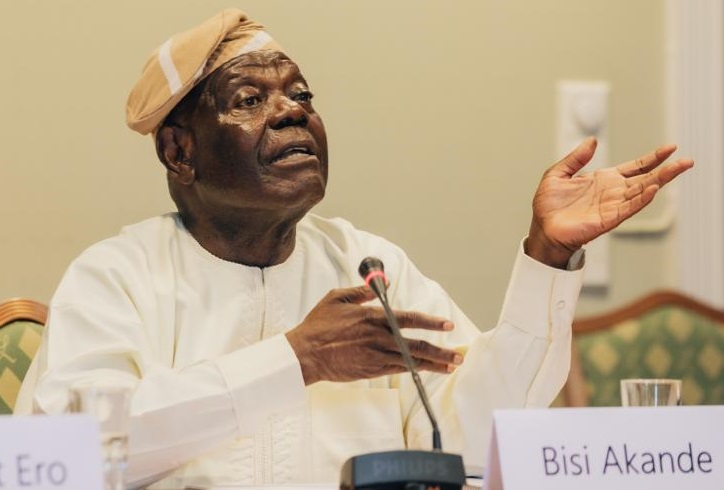
Sirs,
You and others mentioned and not mentioned have been singled out among Yoruba leaders for your steadfast advocacy for True Federalism in Nigeria.
So, who and what are our forces?
While the National Assembly will hold public hearings, these amendments will ultimately require ratification by State Houses of Assembly.
Senate Leader Opeyemi Bamidele has already affirmed that both NASS and State Assemblies have the authority to pass laws for order and peace—under which a Referendum Law can be demanded.
If the central government attempts to suppress such a Referendum, it will face a battle over existential legitimacy—one it cannot win.
For emphasis, below is the Draft Bill for a Referendum:
A Law of Oyo State House of Assembly, Ogun State House of Assembly, Osun State House of Assembly, Ekiti State House of Assembly, Ondo State House of Assembly and Lagos State House of Assembly for the holding of a Referendum on the proposal to Federate Ekiti State with Ogun State, Osun State, Oyo State, Ondo State and Lagos State and constitute same into Oduduwa Region of Western Nigeria, within the Federation of Nigeria.
A: REFERENDUM ON FEDERATION OF EKITI STATE WITH OGUN STATE, OSUN STATE, OYO STATE, ONDO STATE AND LAGOS STATE AND CONSTITUTION OF SAME INTO ODUDUWA REGION IN A FEDERATION OF NIGERIA.
2. The questions or propositions to be voted on in the Referendum and form of the ballot paper to be used for that purpose are to be in the form set out in the schedule herein contained.
3. Those entitled to vote in the Referendum are the persons who, on the date of the Referendum, would be entitled to vote as electors at a local government election in the electoral area/ward of the State in which they reside and/or carry out business.
4.The Governor of Each State shall appoint a Chief Electoral Officer who shall appoint an electoral officer for each Local Government Area.
5. Each Local Government Electoral Officer shall (a) Conduct the counting of votes cast in the area under his/her authority in accordance with any directions given by the Chief Electoral Officer and (b) Certify the number of ballot papers counted by him/her and the number of votes cast for each question/proposition.
6. The Chief Electoral Officer must certify: (a)The total number of ballot papers counted for the whole of Each State and (b) the total number of votes cast for each proposition/question for the whole of the State.
7. The result of the Referendum shall constitute the entire position of the people of Ogun State, Oyo State, Osun State, Ekiti State, Ondo State and Lagos State (WESTERN/ODUDUWA REGION OF NIGERIA).
8. In the event of a YES vote on the Referendum, the Governors of each State shall appoint members into a Constitutional Council of Western/Oduduwa Region.
9. The Constitutional Council of Western/Oduduwa Region shall include not more than twelve (12) other members chosen at random throughout the Region and four (4) members from Kwara and Kogi States.
10. The Constitutional Council of Western/Oduduwa Region shall be vested with powers to present and represent the views of Western/Oduduwa Region and negotiate on behalf of the Western/Oduduwa Region with all the agencies of the Nigerian Government, non-Governmental organizations and the international Community involved in the process.
B: The short title of this Law is "Referendum Law of Ekiti State, Ondo State, Osun State, Oyo State, Ogun State and Lagos
SCHEDULE
FORM OF BALLOT PAPER: Ekiti State House of Assembly, Ondo State House of Assembly, Osun State House of Assembly, Oyo State House of Assembly, Ogun State House of Assembly and Lagos State House of Assembly, have decided to consult the People of Each State on this .......... Day of ........., 202 on the proposal to Federate the Government of Ogun State, the Government of Osun State, the Government of Oyo State, the Government of Ekiti State, the Government of Ondo State and the Government of Lagos State with a view to constituting a REGION of Western Nigeria within a Federation of Nigeria.
THUMBPRINT in the box containing: (YES)
1. I AGREE that the Governments of Ekiti State, Ondo State, Oyo State, Osun State, Ogun State and Lagos State should negotiate with each other with a view to forming a FEDERATION of STATES to be known as the ODUDUWA REGION OF WESTERN NIGERIA which shall negotiate with the Yoruba persons in Kwara and Kogi States, whether they want to be part of the ODUDUWA REGION or not; shall further negotiate with the Government of Nigeria and the remaining 30 states and the administration of the Federal Capital Territory to achieve AUTONOMY/SELF-DETERMINATION for the said REGION within a Federation of Nigeria.
OR
(NO)
2. I DO NOT AGREE that the Governments of Ekiti State, Ondo State, Oyo State, Osun State, Ogun State and Lagos State should negotiate with each other with a view to forming a FEDERATION of STATES to be known as the ODUDUWA REGION OF WESTERN NIGERIA which shall negotiate with the Yoruba in Kwara and Kogi States as to whether they want to be part of the ODUDUWA REGION or not, and further negotiate with the Government of Nigeria and the remaining 30 states and the administration of the Federal Capital Territory to achieve AUTONOMY/SELF-DETERMINATION for the said REGION within a Federation of Nigeria.
ANNEXURE
Bulletin 60
March 24,2025
The Yoruba Referendum Committee acknowledges Professor Wole Soyinka's response to the declaration of a State of Emergency in Rivers State, particularly his emphasis on Federalism in Nigeria. Unlike the opportunism displayed by other political leaders, his response is a direct call to action to formally address Nigeria's flawed Federal structure. Of particular significance is his call for a national discussion on the matter, underscoring that: "Nigeria must hold a national conference to change the country's foundation. The federal spirit of association is a cardinal principle, and for that reason, some of us have called again and again for a national conference to truly give ourselves an authentic people's constitution."
This is a direct challenge to advocates of Restructuring/True Federalism, as Nigeria has held several national conferences since 1999—including the 2006 PRONACO conference—with little to show for them. The much-celebrated 2014 Confab turned out to be nothing more than a talking shop. Even the late Yoruba elder statesman, Chief Olaniwun Ajayi, a participant in the Confab, lamented: "We went there to play."
Given this history of ineffective conferences, the pressing question is: Why have these conferences failed to achieve meaningful change?
This is evident in the 1999 Constitution, which erases the identity of the people by stating: "Nigeria shall be a Federation consisting of States and a Federal Capital Territory."
The Yoruba Referendum Committee asserts that the first step in this renewed call to action is recognizing the People as the Constituent or Federating Unit—not just states created by military fiat.
However, the people never participated in drafting this Constitution—it was imposed by military decree. The phrase "We, The People" is therefore a fraudulent claim, making the principles and rights purportedly enshrined in the Constitution null and void.
The legitimacy of a Constitution is not just a legal matter; it is also a moral and ethical one. Every society has inherent values that guide behavior long before the application of laws. For instance, a Yoruba person instinctively understands acceptable and unacceptable behavior, shaped by family and community upbringing. A Legitimate Constitution must reinforce cultural values rather than undermine them. Yet, the Nigerian state—born out of colonialism—has attempted to impose a false, rootless "Nigerian Personality" disconnected from language and culture.
The post-colonial state—a creation of man—cannot be mistaken for the work of God. God's design recognizes cultural identity, and in turn, humankind must acknowledge His Sovereignty in its affairs. To be "under God" means embracing and expressing our God-given essence. Any attempt to negate this essence undermines the very Sovereignty of God.
The Yoruba Referendum Committee posits that any call to action, including Professor Soyinka's, must first resolve the Legitimacy question by ensuring that the people—not just state governments—have a direct say in defining their governance. For this reason, the Committee has submitted a Bill for a Yoruba Referendum to the State Houses of Assembly. The goal is to give Yoruba people a direct voice in determining their political future.
Professor Wole Soyinka has sounded the call. The ball is now in our court.
Editorial Board
Yoruba Referendum Committee
BULLETIN 59
Imole Gbogbo Adulawo
Re: Moses Oludele Idowu's “The culture of honor. The way of our elites”.
March 10,2025
The Yoruba Referendum Committee addresses the issues raised by Moses Oludele Idowu in his article, “A New Subject is Needed in the Nigerian Curriculum: The Culture of Honor—The Way of Our Elites.”
Moses Oludele Idowu summarizes Karl Marx, stating that Marx correctly believed the attitudes, opinions, and moral quality of a society’s elites shape the general populace. He argues that “without honor, constitutions won’t help us; parliamentary or presidential systems will be a waste of time.” He stresses the need to study history, as every revolution begins with a reckoning of the past, citing historical examples: “The English Revolution had the Puritans, the French had the Jacobins, the Russians had the Bolsheviks, and the Americans had the Sons of Liberty. These prompted him to demand from us thusly: “Now, tell me—who will spearhead the Nigerian revolution? Which group in Nigeria has a culture of honor and remains uncompromised?”
The Yoruba Referendum Committee responds as follows
:
(i) Moses Oladele Idowu’s reference to Marx reflects only one side of his thesis—what Marx termed “idealism.” However, Marx also emphasized“materialism,” which asserts that economic, social, and cultural contradictions drive history. This perspective, also known as “dialectical materialism,” better explains Nigeria’s reality.
(ii) Attributing the Nigerian Problematic solely to a lack of honor, without considering material conditions and systemic contradictions, is, in itself, idealistic. While lamenting the absence of a culture of honor, Moses Oladele Idowu simultaneously suggests embedding it in the curriculum of an educational system controlled by the very elites he criticizes.
(iii) The Constitution can indeed help—if placed within its material context. Nigeria’s presidential system was copied from the U.S., whose economy was the largest at the time. The U.S. system evolved within a capitalist framework where transparency was essential for competition otherwise it (competition) will be meaningless. Additionally, the U.S. had no need for a Parliament, as it was
breaking away from the British Monarchy.
(iv) In contrast, Nigeria’s military—established as a colonial force designed to suppress “natives” and built around a local Hegemony—had no independent consciousness. It could only function as a hegemonic structure, contradicting the principles of independence. Nigeria’s Parliamentary System initially allowed for autonomous representation, akin to the British Parliament, which gave a voice to the commoners. If Nigeria’s anti-colonial leaders had acted like the American Founding Fathers, they might have adopted a presidential system. However, this was impossible due to Nigeria’s diverse ethnic nationalities—unlike the U.S., which had already decimated its indigenous populations. Azikiwe and the NCNC attempted a variant of the American system but failed due to Nigeria’s ethno-national complexities, ultimately leading to war.
(v) The presidential system and the expenses associated with it fuels and is fueled by corruption. In contrast, a parliamentary system mitigates the excessive role of money. One does not need billions to contest elections, which naturally fosters a culture of honor. This highlights the tension between idealism and materialism.
(vi) All the revolutions cited by Moses Oladele Idowu—English, French, Russian, and American—had one thing in common: they were mono-ethnic or mono- national. Their leaders emerged from distinct cultural realities, embedding a culture of honor within their movements. Nigeria, by contrast, must first address its ethno-national question.
(vii) History and culture are intertwined. Nigeria’s problem is not the absence of a culture of honor but the denial of its ethno-national realities, leading to a countrywide erosion of honor. For example, the Yoruba uphold Omoluabi as a cultural imperative, embodying honor. Yet, its full manifestation is obstructed by the suppression of Yoruba nationhood/Autonomy within the Nigerian State. The same applies to other ethnic nationalities. A parliamentary system is the most viable political solution.
(viii) This is the essence of True Federalism—recognizing Nationalities as Federating units, embedding their inherent culture of honor within governance.
(ix) When the Tinubu administration reinstated Nigeria’s old national anthem from the parliamentary era and Yoruba governors introduced the Yoruba National
Anthem (whose last line inspired this response’s title), they acknowledged the necessity of formally recognizing ethnic nationalities as the foundation for an
honor-driven society.
(x) In furtherance of this principle, the Yoruba Referendum Committee submitted a Bill to the Houses of Assembly in Lagos, Ogun, Oyo, Osun, Ekiti, and Ondo, seeking legal approval for a Referendum.
(xi) The Yoruba Referendum Bill Proposes:
(1) A Federal Nigeria governed by a valid constitution (The Union of Nigerian Constituent Nationalities), with a Federal Presidential Council composed of representatives from each nationality. The Head of State would be chosen as primus inter pares with a fixed term.(2) The Western/Oduduwa Region shall be a constituent unit of the Nigerian Union.(3) The Western/Oduduwa Region shall adopt a parliamentary system of government.(4) The Federal Government shall have no power to interfere in Oduduwa’s affairs unless approved by three-quarters of the region’s Parliament.(5) A division of the Federal Armed Forces 90% of which personnel shall be indigenes of the Region. The Divisional commander shall be an indigene of Oduduwa Region. (6) The Judicial power of the Region shall be vested in the Supreme Court of the Region, Court of Appeal, High Court, Customary Court and Other lower courts as the Parliament may establish. There shall be a Court of Appeal in each of the provinces. There shall be, in each province, a High Court from which appeals shall lie to the Court of Appeal and Supreme Court of the Region.(7) Western/Oduduwa Region shall have its own internal security system.(8) Resource Control: Each Constituent Unit of the Nigerian Federation shall control primary interest in its own resources with an agreed Tax Model for the Federation.
(xii) In essence, the Yoruba Referendum encapsulates the aspirations of Yoruba people—just as the Puritans, Jacobins, Sons of Liberty, and Bolsheviks once did for theirs. As the Yoruba Nationalty Referendum, it will serve as a beacon for otherNationalities in Nigeria as well as other countries in Africa undergoing different stages of Ethno-National contradictions– imole gbogbo Adulawo.
Editorial Board
Yoruba Referendum Committee
February 10; 2025
A Call for Re-Federalization: Addressing the Mediating Factors for a New Nigeria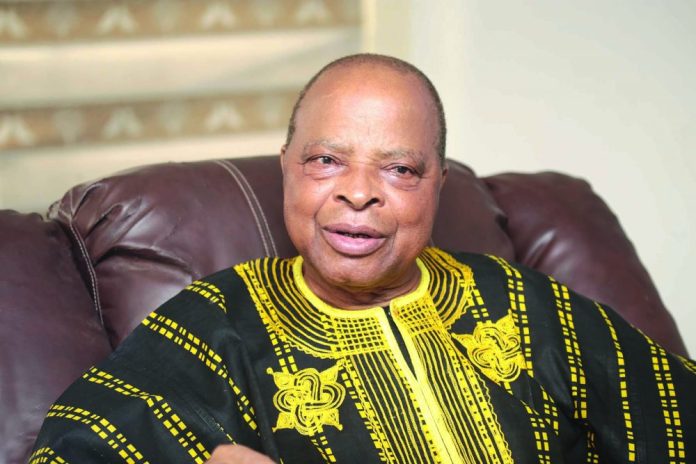
Former Governor of Ekiti State, Dr. Kayode Fayemi, was quoted by "The Cable" as saying:
“Power knows the truth, but does not act on it because sometimes there are many mediating factors. President Bola Ahmed Tinubu has done many good things; we must all acknowledge that. He’s been bold in taking on some of the most difficult decisions that previous leaders have been reluctant to make. The fallout from those decisions has caused us a huge cost of living crisis, including the removal of the fuel subsidy and the convergence of the FX window. However, he is well-meaning, but well-meaning is not enough in leadership; intentionality is critical to success. Whether you talk about student loans, other efforts at resisting insurgency, taming insecurity, tax policy reform, or increasing revenue into the federal coffers, clearly some elements are there but need to come together. This is where an effective policy framework goes hand in hand with leadership acumen to change the narrative. Maybe that’s the area where we need to do a lot more.”
The Yoruba Referendum Committee responds as follows:
Changing the Narrative:
When power knows the truth but does not act on it because of mediating factors, it is essential to identify these factors to create a pathway for addressing them. We all know the truth that is not being acted upon: the de-federalization of Nigeria, and the solution to this is re-federalization, also known as "Restructuring" or "True Federalism."
Therefore, the mediating factors cannot be limited solely to those in power, such as the Presidency. They must also include those outside it—like Dr. Kayode Fayemi and others—who are conscious of the need to address the issue, as they too are affected by these mediating factors.
So, what are the mediating factors preventing the re-federalization of Nigeria? Let us focus on the most important factor—the crux of the matter: the non-existence of a clear pathway toward re-federalizing Nigeria.
Truth is dependent on its legitimacy. Therefore, the pathway and methodology for acting on it must also possess legitimacy.
For the President, legitimacy lies within the Constitution, through which he has attempted to change the narrative via legislation. The most prominent of these is the “Tax Bills war,” which seeks to sustain the unitary structure of Nigeria, centered around allocations from the federal government. This structure has driven Nigeria to its current state and forms the basis of the President’s economic paradigm.
On the other hand, those outside power have wrongly assumed that the quest for re-federalization rests solely with the Presidency. This has resulted in endless conferences since 1999 with little to show for it.
On both sides, the aspirations and expectations of the peoples and nationalities of Nigeria are left out of the equation, making them passive recipients of whatever power decides to give. This omission is the most significant mediating factor, as it denies the legitimacy of the peoples' existence by failing to recognize them as the federating or constituent units in the Constitution.
This is the narrative we need to change.
This denial is a product of political pragmatism, which has made the 1999 Constitution sacrosanct and therefore limited by it.
A constitution should be sacrosanct only when the conditions of its creation reflect the actual or near-actual representation of the society it governs. We all know that the 1999 Constitution did not meet this test, but it was accepted based on pragmatism.
Pragmatism is a necessary part of reality, but it becomes problematic when it substitutes the dynamics of reality itself. When the Decree was handed down as the Constitution, politicians from different divides adopted the pragmatic approach, while those from where the current President emerged attempted to pursue re-federalization. Yet, this approach points to the limitations of pragmatism, as it has failed to achieve its purpose, continually yielding to pragmatic dictates.
All of this stems from the lack of legitimacy given to the aspirations and expectations of the peoples. This was further confirmed when the President responded to “The Patriots,” stating that he would address the “political” issues only after completing his economic reforms. In doing so, he transformed pragmatism from being merely a part of reality into the essence of reality itself—substituting a part for the whole.
This also demonstrates that economic reforms are intertwined with the “political.” They are continuous and ongoing as long as societal economic development is dependent on the relationship between labor and capital, both of which depend on human development, itself driven by the existential imperatives of the peoples.
The denial of the legitimacy of the peoples' aspirations has also led to the drive to control the state as the essence of governance, the raison d'être of politics. This has created conditions for perpetual conflict and economic underdevelopment, where political pragmatism often sustains the status quo, or leads to wars of dominance and attrition, mediated by pragmatic alliances, including foreign support and weapons.
Despite all challenges and obstacles, the Nigerian state was founded as a federal system, which accounted for the expectations and aspirations of its people. For the Yoruba, it remains a beacon of hope. This hope was rooted in the Action Group's decisive victory in the 1951 Western Nigeria Parliamentary Elections, which further legitimized the socio-cultural identity of the Yoruba people and defined the region’s political economy.
Arguably, Yorubaland has sustained its political paradigm since the 1950s, despite various challenges, unlike other African countries whose anti-colonial paradigms collapsed after the demise of their leaders. This is because "Ethno-National" Federalism, championed largely by the West, became the foundation of Nigeria’s independence, allowing for the convergence of cultural, political, and economic imperatives.
The quest to suppress federalism led to its replacement with the current system, which is a direct cause of the economic policies we now face.
Therefore, the effects of these policies are the direct consequences of sustaining a nation-state instead of allowing Nigeria to evolve naturally as a multi-national state, akin to countries like Switzerland and Canada—models for other African nations.
The pressing question is how to regain legitimacy for the peoples of Nigeria, which involves developing a strategy for re-federalization. We currently have several advantages: (i) The presidency, despite its challenges, still holds potential for re-federalization; (ii) Homogeneous state assemblies; (iii) A large segment of our political leaders were "born" in the crucible of anti-military struggles, so they have some understanding of what re-federalization entails; (iv) The Constitution is undergoing amendments; (v) The Senate leader, Opeyemi Bamidele, has indicated that both the National Assembly and state assemblies can pass laws for order and peace.
These advantages can be used to our benefit if Dr. Kayode Fayemi and others in Yoruba leadership adopt the "Yoruba Referendum" as the pathway for re-federalization, which also addresses the "mediating factor" preventing action on the truth—the legitimacy of the people's aspirations. Other nationalities in Nigeria can follow this "Yoruba pathway" according to their own aspirations, leading to a Constitutional Convention that will create a new, necessary Nigeria—one that will shine as a beacon for the entire continent. This will be a lasting legacy.
EditorialBoard
YorubaReferendumCommittee.
December 7. 2024
Bulletin #56
The Yoruba Referendum Committee has been consistent in its advocacy for “Nationality Referendums” as the pathway to Re-Federalizing Nigeria. For the Yoruba, this will be the “Yoruba Referendum”. Re-federalization is crucial because all the political and economic underdevelopment of Nigeria can be traced to the overthrow of the Federal System in 1966 and replaced with the current Unitary System, fraudulently labeled as Federation. A Bill for a Law to conduct this Yoruba Referendum has been submitted to t he Lagos, Ogun, Oyo, Osun, Ondo and Ekiti Houses of Assembly and the respective Governors. Plans are afoot to resubmit the Bill as a reminder.
This background is necessary as the context for issues on Nigeria's Federalism occasioned by steps taken by President Tinubu and the resulting fall-out we are witnessing.
Now that it has resurfaced in the form of the Tax Bills, the necessity to address the political cannot be more self-evident. This is why we are emphasizing resolution of the “political” as primary.
As it stands now,(and there is nothing to suggest it will end here more so when it is a recurring decimal in Nigeria's political evolution) the stance of “Northern” leaders, Legislators and Governors is projected as protecting the interests of the North despite the fact that the “North” However defined, is inhabited by several Nationalities among whom are those who, like the Yoruba in Kwara and Kogi States as well as those in the Middle Belt, have repeatedly objected to being classified as “North”. This again shows the centrality of the “political” as we must first identify who is who after which pursuit of economic reforms can proceed.
Therefore, what is to be done, the “Ona Abayo”, is for Yoruba political leaders and elders to demand and pressurize our Houses of Assembly to pass the "Yoruba Referendum Bill" seeking a “Yoruba Region” into Law and conduct the Referendum. Even if “northern” Senators or leaders object in the National Assembly or their state Assemblies, they cannot override the Legitimacy of the rest of us to conduct a referendum in other regions
The Referendum Law of a State Assembly does not require the concurrence of 2/3rds of State Assemblies nor does it require the concurrence of the National Assembly. Such a law is its own Legitimacy. Indeed, such a test of Legitimacy will become our contribution to reviewing the 1999 Constitution.
When new states are created in the "south", more will be created in the "north" creating an unequal quid pro quo. Otherwise no state creation in the South will scale the 2/3rds huddle, or only those states in the south willing to acquiesce to the North will get the nod. Besides, the argument that new states will "foster development" is a farce. If current states have not fostered development since their creation, it stands to reason that development has no correlation with state creation, more so in a "feeding bottle Federalism" in existence. This is not to mention the various newly minted "Development Commissions" supposedly aimed at "fostering development"..
President Tinubu is welcome to endorse “Nationality Referendums”.
Editorial Board
Yoruba Referendum Committee.
BULLETIN 55
October 5, 2024
Yoruba Referendum: The time is NOW!
The Yoruba Referendum Committee is once again calling on our Governors and Houses of Assembly to step up and seize the opportunity now being presented by the National Assembly in its current attempt at reviewing the amended 1999 Constitution.
The Governors and State Assemblies can do this by passing into Law, the Bill for a Referendum in Yorubaland which has been sent to them. Passing the Bill into Law will enable them to begin preparations for conducting the Referendum as the precursor for a New and Federal Constitution for Nigeria.
This is necessary considering a member of the National Assembly's Constitution Review Committee's summary of their review as centered on “Federalism, State Police and Local Government Autonomy” as if they are separate issues.
On his part, the Senate Leader, Opeyemi Bamidele, stated that if Regionalism is to be addressed as part of Re-Federalizing Nigeria, “the political stakeholders, the civil society, as well as other stakeholders in 4the,2 country, would have to debate on it and come to a conclusion”.024
Of course, the Legitimate and peaceful path towards this is the Referendum Pathway.
Yet, some Yoruba propose going along with continuous amendments to the 1999 Constitution because they believe that the amendments can devolve more powers to the Federating Units.
The question of Federalism has been the fundamental issue for Nigeria, pre- and post- Independence. All other issues are subsumed under it. Therefore, it must be addressed directly.
We therefore proceed as follows:
Editorial Board
Yoruba Referendum Committee
Bulletin #54:
August, 11, 2024
The President, “The Patriots” and a new Constitution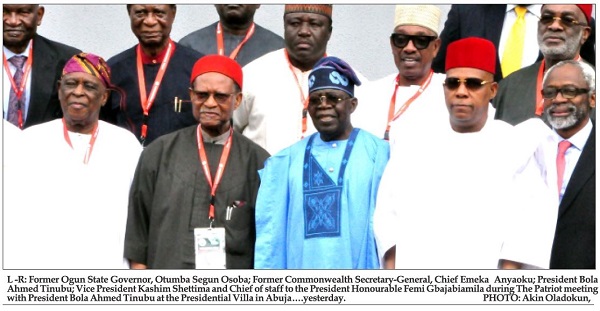
“The Patriots”, a group of eminent Nigerians led by the former Commonwealth Secretary-General, Chief Emeka Anyaoku, visited President Bola Ahmed Tinubu and gave the President a proposal for Constitutional Re-Formation of Nigeria.
The President promised to review both The Patriots’ proposal as well as other options, once his priority, his economic reforms, are in place. Other options in circulation range from a return to the 1963 Constitution, a change to the Parliamentary System, an adjustment to the current Presidential System, including what some have characterized as Nigeria’s “home grown democracy” etc. all of which can also be placed under “Constitutional Review”, since none of these options can come to fruition without a review of the Constitution.
Based on both the President’s promise as well as the Patriots’ proposal, the Yoruba Referendum Committee asserts as follows:
Editorial Board,
Yoruba Referendum Committee
Bulletin #53
August 9,2024
To: The 33 Local Government Chairmen and Residents of Oyo State
From: The Yoruba Referendum Committee.
ONA ABAYO
This Letter acknowledges the position you and the Oyo State Governor have taken in respect of the Supreme Court’s judgement on Local Government funding.
Contrary to allegations of criminality or illegality on the part of the Governor and all of you as Local Government Chairmen, we make bold to say that there is no criminality involved and no criminality can be imputed. This is because neither the Governor nor the Local Government chairmen can stop the Supreme Court judgement from taking effect. The Governor or the Local Government chairmen are not making the payments for or by themselves. The payment is to come directly from the Federal Government and directly into LG Accounts. The worst the LG Chairmen or Governor can or will do is not to touch the money. There is no crime in this.
So, what the governor is doing is challenging the Unconstitutionality of the judgement. He has the right, and the obligation, to do so.
This is because the judgement and the position you have taken, touches on the fundamental question of Federalism in Nigeria, more so when they occur at a time when a series of amendments/alterations to the 1999 Constitution is being contemplated.
We must assert that this is not simply a question of Law. It is a Constitutional matter. There is a major difference between the “law” and the Constitution. This is why the Constitution is described as the “Fundamental Law” of the land. The Constitution prescribes the law. The Constitution is also superior to the “law”, which is why laws which are not consistent with the Constitution are not valid.
Therefore, let no one intimidate us about the law. We are dealing with a Constitutional matter. This is why we propose the Referendum as the way to address and review the Constitution. It is our hope that you and the Governor will throw your weight into encouraging the Oyo State House of Assembly to pass the Bill for a Referendum into Law.
You may want to ask what the connection is, between Oyo State position on the Supreme Court judgement and the “Yoruba Referendum” especially when the process of amending the Constitution is already underway where we can simply send a memo to the National Assembly Committee on Constitution Review.
We do not need to send a Memo to the National Assembly for the following reasons:
Thank you.
Editorial Board
Yoruba Referendum Committee
July 21,2024
Bulletin #52
Time is of the essence (4): For the attention of all Yoruba groups and leaders.
“O’nbo, O’nbo……….”
Editorial Board,
Yoruba Referendum Committee
July 18, 2024
Bulletin # 51: Time is of the essence(3)
Governor Seyi Makinde: Clearing the confusion
Oyo State Governor Seyi Makinde addressed Oyo State stakeholders on the recent judgment of the Supreme Court on Local Government Administration. As should be expected, he reiterated the activities of the Oyo State government while also concluding that the disconnect between the law and the Constitution has created a lot of confusion which means there is a problem with the structure (that is, the Constitution) thus behooving on them to remove the confusion as soon as possible.
The Yoruba Referendum Committee agrees with this conclusion, many of which are obvious to all the operators of the Constitution, which are nothing more than addressing the law while leaving the Constitution as it is, thereby creating more confusion, another round of which is ongoing. The Governor highlighted this confusion amid ongoing efforts at another series of “alterations” to mandate a once-and-for-all interrogation of the confusion and putting forth a pathway to a resolution.
Hence, the Yoruba Referendum Committee declares as follows:
Editorial Board,
Yoruba Referendum Committee
July 13, 2024
Bulletin # 50: TIME IS OF THE ESSENCE(2)
Be it noted and it is hereby noted that:
Editorial Board,
Yoruba Referendum Committee.
Bulletin #49: Time is of the essence (1)
Open Letter to Governors Biodun Oyebanji; Dapo Abiodun; Babajide Sanwo-Olu; Seyi Makinde; Lucky Ayedatiwa, Ademola Adeleke and Speakers of Ekiti, Ogun, Lagos, Oyo,Ondo and Osun States’ Houses of Assembly.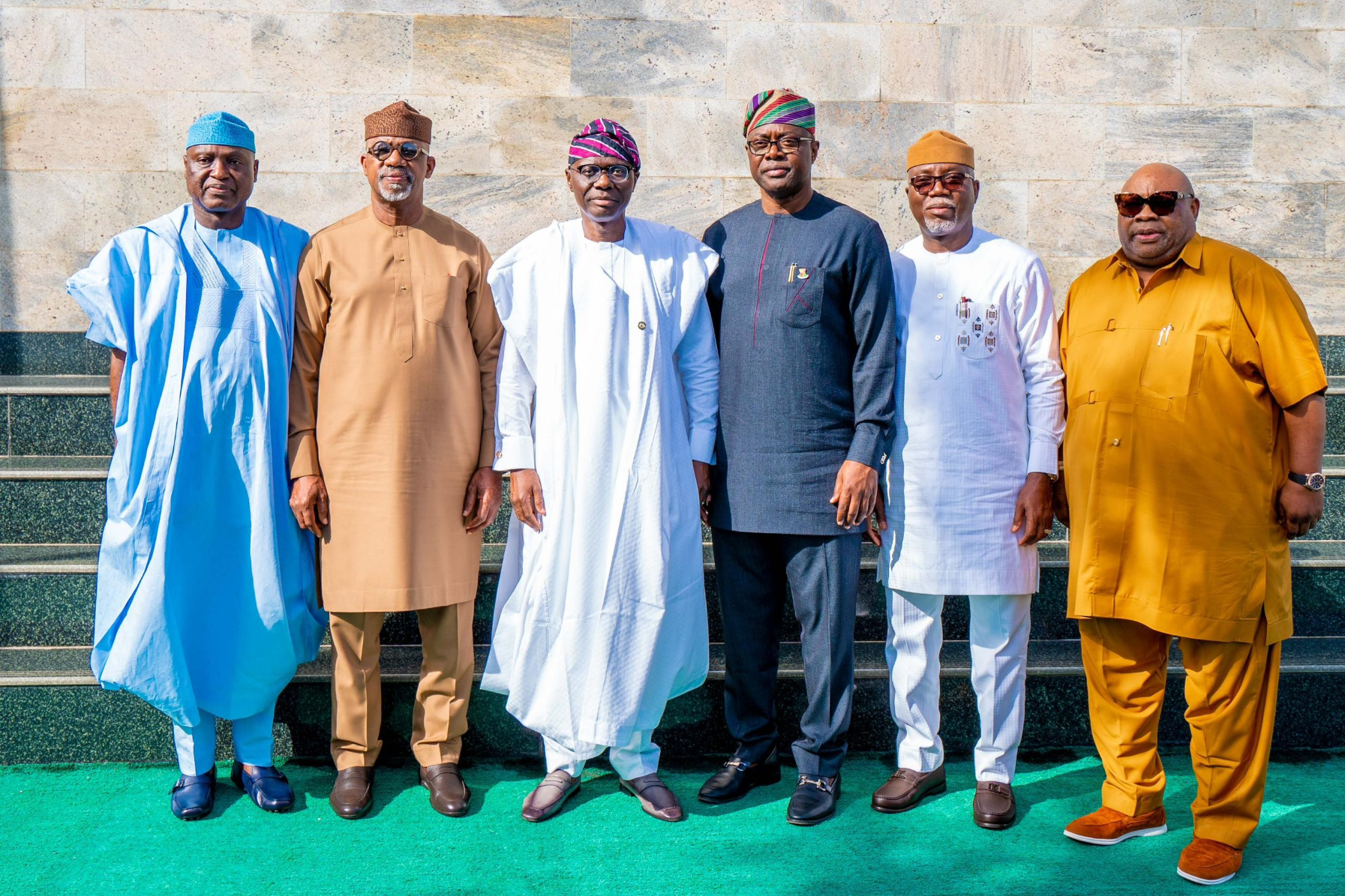
Recent developments in Nigeria, especially the moves by the current Administration, show that Nigeria is moving towards a Centralized and Unitarized State contrary to the interests of the various Nationalities making up the country. It is worse for the Yoruba because it will erase everything the Yoruba stood (and still stands) for, from the formation of Egbe Omo Oduduwa whose main goal is to collaborate with others in Nigeria to establish Nigeria as a Federal State, as stated in its founding Constitution. This quest for True Federalism is not only at the heart of Yoruba politics in Nigeria’s context but has also remained a constant.
The Administration is taking these steps because it knows the political and economic importance. The Administration’s economic policies, aimed at correcting the underdevelopment of the past, and which have caused major dislocation in the economic well-being of the people, need political measures to sustain it.
We make bold to say that this necessarily implies the creation of a supra-national state. Supra-national here is in the sense that all ethno-national centers of power would have to be neutralized as a necessary pre-condition, which directly translates into reducing the influence of State governments by controlling the Local Government from the center. This has been the recurring decimal in Nigeria since Independence, starting with the Coalition of the NCNC and NPC with the dual aim of neutralizing the AG and imposing their Hegemony. The battle for Hegemony between them led to the first military coup, resulting in the ban placed on socio-cultural groups and the abolition of the Regions. Eventually, the military substituted itself for the national center of power, becoming the alternative and/or new power base.
This is now being cemented by what is being called “Local Government Autonomy” as well as the call by the country’s Attorney-General to scrap the State Electoral Commissions and transfer their operations to INEC.
These moves strike at important aspects of Federalism, hence we are calling on you to rescue Yorubaland by pursuing “True Federalism.” It is so named only because what currently obtains and is being pursued by the current Administration is False Federalism.
You have a critical role to play in the sense that your office is now at the cusp of history, to wit: whether you want to see Yorubaland and everything the Yoruba had stood for, since the anti-colonial days, go to waste under your watch.
Hence, we urge you to consider the following:
The Draft Bill for a Yoruba Referendum has been sent to you and the State Houses of Assembly.
Here is a copy, for the benefit of readers.
Editorial Board,
Yoruba Referendum Committee.
DRAFT BILL FOR A REFERENDUM LAW
A Law of Ekiti State House of Assembly, Ogun State House of Assembly, Osun State House of Assembly, Oyo State House of Assembly, Ondo State House of Assembly and Lagos State House of Assembly for the holding of a Referendum on the proposal to Federate Ekiti State with Ogun State, Osun State, Oyo State, Ondo State and Lagos State and constitute same into Oduduwa Region of Western Nigeria, within the Federation of Nigeria.
A: REFERENDUM ON FEDERATION OF EKITI STATE WITH OGUN STATE, OSUN STATE, OYO STATE, ONDO STATE AND LAGOS STATE AND CONSTITUTION OF SAME INTO ODUDUWA REGION IN A FEDERATION OF NIGERIA.
1. On the…………. Day of ……… 202, a Referendum shall be held in Ekiti State, Ogun State, Osun State, Oyo State, Ondo State and Lagos State of Nigeria on:
(i) Whether the Governments of Ekiti, Ogun, Osun, Oyo, Ondo and Lagos States should negotiate with each other with a view to forming a FEDERATION of STATES to be known as the ODUDUWA REGION OF WESTERN NIGERIA and (ii) whether the said REGION should negotiate with the Government of Nigeria and the remaining 30 states or any group of states that have also agreed to Federate and the administration of the Federal Capital Territory to achieve AUTONOMY/SELF-DETERMINATION for the said REGION within a Federation of Nigerian Constituent Units.(ANNEXURE)
2. The questions or propositions to be voted on in the Referendum and form of the ballot paper to be used for that purpose are to be in the form set out in the schedule herein contained.
3. Those entitled to vote in the Referendum are the persons who, on the date of the Referendum, would be entitled to vote as electors at a local government election in the electoral area/ward of the State in which they live and/or conduct business.
4. The Governor of Each State shall appoint a Chief Electoral Officer who shall appoint an electoral officer for each Local Government Area.
5. Each Local Government Electoral Officer shall (a) Conduct the counting of votes cast in the area under his/her authority in accordance with any directions given by the Chief Electoral Officer and (b) Certify the number of ballot papers counted by him/her and the number of votes cast for each question/proposition.
6. The Chief Electoral Officer must certify:
(a) The total number of ballot papers counted for the whole of Each State and (b) the total number of votes cast for each proposition/question for the whole of the State.
7. The result of the Referendum shall constitute the entire position of the people of Ogun State, Oyo State, Osun State, Ekiti State, Ondo State and Lagos State (WESTERN/ODUDUWA REGION OF NIGERIA).
8. In the event of a YES vote on the Referendum, the Governors of each State shall appoint members into a Constitutional Council of Western/Oduduwa Region.
9. The Constitutional Council of Western/Oduduwa Region shall include not more than twelve (12) other members chosen at random throughout the Region and four (4) members from Kwara and Kogi States.
10.The Constitutional Council of Western/Oduduwa Region shall be vested with powers to present and represent the views of Western/Oduduwa Region and negotiate on behalf of the Western/Oduduwa Region with all the agencies of the Nigerian Government and non-Governmental organizations involved in the process.
B: The short title of this Law is “Referendum Law of Ekiti State, Ondo State, Osun State, Oyo State, Ogun State and Lagos State”.
SCHEDULE
FORM OF BALLOT PAPER: Ekiti State House of Assembly, Ondo State House of Assembly, Osun State House of Assembly, Oyo State House of Assembly, Ogun State House of Assembly and Lagos State House of Assembly, have decided to consult the People of Each State on this ………. Day of ………, 202 on the proposal to Federate the Government of Ogun State, the Government of Osun State, the Government of Oyo State, the Government of Ekiti State, the Government of Ondo State and the Government of Lagos State with a view to constituting a REGION of Western Nigeria within a Federation of Nigeria.
THUMBPRINT in the box containing: (YES)
1. I AGREE that the Governments of Ekiti State, Ondo State, Oyo State, Osun State, Ogun State and Lagos State should negotiate with each other with a view to forming a FEDERATION of STATES to be known as the ODUDUWA REGION OF WESTERN NIGERIA which shall negotiate with the Yoruba persons in Kwara and Kogi States, whether they want to be part of the ODUDUWA REGION or not; shall further negotiate with the Government of Nigeria and the remaining 30 states and the administration of the Federal Capital Territory to achieve AUTONOMY/SELF-DETERMINATION for the said REGION within a Federation of Nigeria.
OR
(NO)
2. I DO NOT AGREE that the Governments of Ekiti State, Ondo State, Oyo State, Osun State, Ogun State and Lagos State should negotiate with each other with a view to forming a FEDERATION of STATES to be known as the ODUDUWA REGION OF WESTERN NIGERIA which shall negotiate with the Yoruba in Kwara and Kogi States as to whether they want to be part of the ODUDUWA REGION or not, and further negotiate with the Government of Nigeria and the remaining 30 states and the administration of the Federal Capital Territory to achieve AUTONOMY/SELF-DETERMINATION for the said REGION within a Federation of Nigeria.
ANNEXURE